When your stolen data comes back from the dead, it doesn’t return weaker—it returns with reinforcements.
The Zombie Data Problem
You might think that a data breach from 2019 would be old news by now. Outdated. Stale. Maybe even useless to criminals who have surely moved on to fresher targets.
You would be wrong.
On February 2, 2026, a newly circulated dataset tied to AT&T began making its rounds through private criminal channels. This wasn’t a new breach—it was something far more sinister. It was the reanimated corpse of old breach data, merged, enriched, and structured into what security researchers are calling one of the most complete identity packages ever compiled on American consumers.
The numbers are staggering: approximately 176 million records containing up to 148 million Social Security numbers, 133 million full names and addresses, 132 million phone numbers, 75 million dates of birth, and 131 million email addresses.
“When data resurfaces, it never comes back weaker,” warned Malwarebytes in their analysis of the dataset. “A newly shared dataset tied to AT&T shows just how much more dangerous an ‘old’ breach can become once criminals have enough of the right details to work with.”
This is the zombie data phenomenon. And if you’ve ever been an AT&T customer, you need to understand exactly what it means for you.
A Brief History of AT&T’s 2024 Breach Disasters
To understand why this 2026 dataset is so dangerous, we need to revisit the catastrophic breach events of 2024. AT&T didn’t just have one breach that year—they had two, both of historic proportions.
The March 2024 Revelation: 73 Million Records Exposed
On March 30, 2024, AT&T finally acknowledged what security researchers had been screaming about for years: a massive dataset containing personal information of approximately 73 million current and former customers had been circulating on the dark web.
The exposed data included:
- Full legal names and residential addresses
- Telephone numbers and email addresses
- Complete dates of birth
- Account passcodes and PINs
- Billing account numbers
- Social Security numbers (for a substantial subset)
The most damning aspect? This data originated from 2019 or earlier. Security researchers had first spotted portions of it on dark web marketplaces in 2021—a full three years before AT&T publicly acknowledged the breach. During that three-year window, the company maintained that no breach had occurred, even as criminals actively traded and monetized the stolen data.
The breach was attributed to the ShinyHunters hacking collective, a sophisticated cybercriminal organization with a track record of high-profile data theft operations.
The July 2024 Snowflake Catastrophe: 110 Million More Records
As if March’s disclosure wasn’t bad enough, AT&T dropped another bombshell just four months later. On July 12, 2024, the company announced that hackers had illegally downloaded call and text metadata from nearly 110 million customers—essentially their entire wireless subscriber base.
This breach occurred through AT&T’s cloud data warehouse hosted on Snowflake Inc.’s platform. The attackers had gained access between April 14-25, 2024, giving them 11 uninterrupted days to exfiltrate data.
What they stole was different from the March breach, but equally valuable:
- Phone numbers of AT&T customers
- Phone numbers that AT&T customers called or texted
- Counts of customer interactions (call and text volume)
- Aggregate call duration data
- Cell site identification numbers for some customers
The data covered communications from May through October 2022, plus January 2, 2023.
How did the attackers get in? The answer is almost embarrassingly simple: AT&T hadn’t enabled multi-factor authentication on their Snowflake workspace. Attackers used credentials stolen via infostealer malware to simply log in with a username and password—no additional verification required.
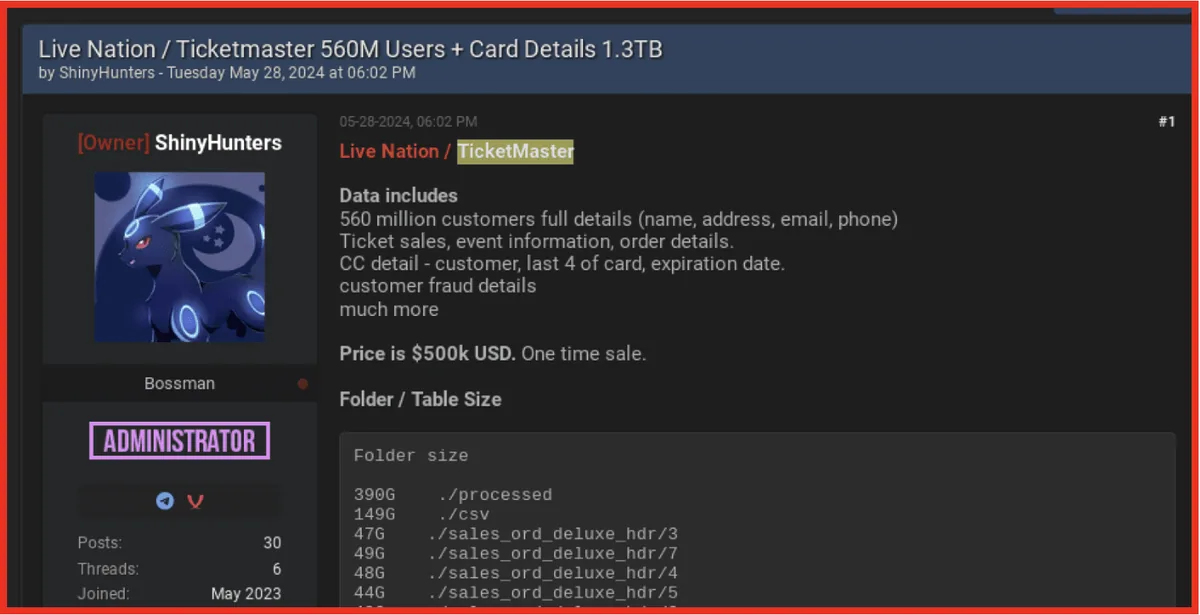
This wasn’t an isolated incident. The same criminal group (identified as UNC5537, also known as Scattered Spider) conducted a coordinated campaign against approximately 160 Snowflake customers, including Ticketmaster (560 million records), Santander Bank (30 million records), and Neiman Marcus.
AT&T reportedly paid a $370,000 Bitcoin ransom for the attackers to delete the stolen data. Whether they actually deleted it remains, shall we say, optimistic.
The $177 Million Settlement: A Drop in the Bucket
In March 2025, AT&T agreed to a combined $177 million settlement to resolve class action lawsuits stemming from both breaches. The settlement breaks down to $149 million for the March breach and $28 million for the July incident.
Affected customers could claim up to $7,500 in compensation, with payments expected to arrive in Spring 2026. Final court approval was granted on January 15, 2026.
But let’s do some math. With 109 million affected customers and a $177 million settlement fund, that works out to roughly $1.62 per person—if everyone filed a claim. Even the maximum $7,500 payout (reserved for those who can document significant financial losses from identity theft) seems inadequate when your Social Security number, date of birth, and complete contact information are now permanently circulating among criminal networks.
The Federal Communications Commission is still investigating, with potential additional fines in the $50-100 million range. But regulatory penalties, however large, don’t unspill the milk. The data is out. It’s not coming back. And as February 2026 demonstrates, it’s actively getting worse.
Why “Old” Breach Data Gets More Dangerous Over Time
This is the part that most people don’t understand about data breaches, and it’s the key insight that makes the February 2026 AT&T dataset so concerning.
Stolen data doesn’t age like milk. It ages like wine.
Here’s what happens to breach data after the initial theft:
Stage 1: Raw Dump (Months 1-6)
Immediately after a breach, the stolen data is often messy. It might be in unusual formats, have duplicate entries, contain errors, or lack consistent structure. Initial buyers get the data cheap but have to do significant work to make it usable.
Stage 2: Cleaning and Structuring (Months 6-18)
Criminal data brokers begin cleaning the datasets. They remove duplicates, standardize formats, fix obvious errors, and organize the data into searchable databases. The data becomes more expensive but more useful.
Stage 3: Enrichment and Correlation (Years 1-3)
This is where things get truly dangerous. Criminal organizations begin correlating data across multiple breaches. They match records from the AT&T breach with records from the 2017 Equifax breach, the 2019 Capital One breach, the 2024 National Public Data breach (which exposed 2.9 billion records), and dozens of smaller incidents.
What might have been a phone number and email address from AT&T becomes a complete identity profile: name, address, phone, email, SSN, date of birth, employer, bank accounts, family members, and more.
Stage 4: Aggregated Identity Packages (Years 3+)
The final evolution is what we’re seeing in February 2026. These are meticulously compiled identity packages that include every useful data point criminals have ever collected about an individual. They’re structured for easy searching—type in a name or phone number and get a complete victim profile.
The February 2026 AT&T dataset represents this final stage of evolution. It’s not raw breach data. It’s years of accumulated intelligence, cleaned and structured into a weapon.
The Math of Data Aggregation
Consider what happens when you combine data from multiple breaches:
From AT&T (March 2024): Name, address, phone, SSN, DOB, email From AT&T (July 2024): Communication patterns, frequently contacted numbers From a 2023 healthcare breach: Medical conditions, insurance information From a 2022 retailer breach: Shopping habits, payment methods From social media scraping: Family connections, workplace, interests
Individually, each dataset is concerning but manageable. An email address enables spam. A phone number enables robocalls. An address helps attackers guess which services you use.
But combined? A criminal can now:
- Call your bank and pass all security verification questions
- Contact your mobile carrier and convincingly request a SIM swap
- File a tax return in your name (with your SSN, address, and employer information)
- Open new credit accounts
- Impersonate you to your employer
- Target your family members with convincing social engineering
As McAfee noted in their analysis of large-scale breaches: “When combined, these data points create a comprehensive profile of an individual, significantly increasing the risk of sophisticated identity theft.”
The SIM Swap Epidemic: Your Phone Number Is the Master Key
One of the most devastating attacks enabled by aggregated breach data is the SIM swap. And it’s absolutely exploding in frequency.
In the UK, SIM swap fraud increased by 1,055% in 2024 alone—from 289 reported incidents to nearly 3,000. In the United States, the FBI reported that victims lost almost $26 million to SIM swapping scams in 2024, not including lost wages, business disruption, or recovery costs.
T-Mobile was hit with a $33 million arbitration award after a single SIM swap attack drained a customer’s cryptocurrency holdings. That’s thirty-three million dollars from one attack on one victim.
How SIM Swaps Work
A SIM swap attack occurs when a criminal convinces your mobile carrier to transfer your phone number to a SIM card they control. Once successful, every call and text message meant for you—including two-factor authentication codes—goes to the attacker instead.
Here’s the typical attack chain:
Step 1: Reconnaissance Attackers gather personal data from breach dumps, social media, and data broker sites. They collect your date of birth, address, last four digits of your SSN, account PIN (if leaked), and any other information carriers might use to verify identity.
The February 2026 AT&T dataset provides all of this in one convenient package.
Step 2: Social Engineering the Carrier Armed with your personal dossier, attackers call the carrier pretending to be you in crisis: “My phone was stolen! I need my number transferred to a new SIM immediately or I’ll be locked out of my bank account!”
They might use caller ID spoofing to make it appear they’re calling from your phone. Some use AI voice cloning to match your gender and accent. If the agent hesitates, they fax over doctored photo IDs generated from readily available templates.
Call center agents, pressured by metrics like “average handle time” and “first-call resolution,” often comply.
Step 3: Account Takeover The moment the swap completes, your phone drops to “No Service” or “SOS Only.” Every SMS-based one-time password now lands on the attacker’s device. Within minutes, they can:
- Reset your email password
- Access your bank accounts
- Drain cryptocurrency wallets
- Take over social media accounts
- Enable recovery loops that lock you out permanently
Step 4: Monetization Funds are quickly transferred through cryptocurrency mixers or converted to gift cards. By the time you realize what’s happened and contact your carrier, the money is gone.
Why AT&T Data Is Perfect for SIM Swaps
The February 2026 AT&T dataset is essentially a SIM swap starter kit. It contains:
- Phone numbers (the target)
- Full names (for impersonation)
- SSNs (the verification gold standard)
- Dates of birth (common security question)
- Addresses (often used for verification)
- Email addresses (for account recovery takeover)
According to Keepnet Labs, 96% of SIM swap cases involve social engineering or insider collusion—not sophisticated hacking. The barrier isn’t technical skill; it’s information. And that information is now available at scale.
The Phishing Renaissance: Personalized Attacks at Scale
Remember when phishing emails were obvious? Misspelled words, generic greetings, Nigerian princes with suspiciously large inheritances?
Those days are over.
Modern phishing campaigns, powered by breach data like the February 2026 AT&T dataset, are hyper-personalized and terrifyingly effective. Here’s what a modern AT&T-themed phishing attack might look like:
Subject: Urgent: Verify Your AT&T Account - Action Required by [Real Customer’s Name]
Body: “Dear [First Name],
We’ve detected unusual activity on your AT&T account ending in [Last 4 digits of real phone number]. As part of our security protocols, we need to verify the following information:
Account Holder: [Full Name] Service Address: [Partial Real Address - e.g., ”…Main Street, Anytown”] Last 4 SSN: [Actual Last 4 Digits]
If this information is incorrect, please click here immediately to secure your account and prevent service interruption.
If you did not request this security review, contact us at 1-800-[Fake Number] to report unauthorized access.
AT&T Security Team”
See the difference? The attacker already has enough real information to seem legitimate. The victim, seeing their actual name, address fragments, and even their real last-four SSN, is far more likely to believe the communication is genuine.
Malwarebytes specifically warned about this in their February 2026 analysis: the dataset “can be used to craft convincing AT&T-themed phishing emails and texts, complete with correct names and partial SSNs to ‘prove’ legitimacy.”
Tax Fraud and Credit Nightmares: The Long-Term Fallout
While SIM swaps and phishing attacks are immediate threats, the long-term implications of SSN exposure are even more concerning.
Tax Return Fraud
Armed with your Social Security number, date of birth, and address, criminals can file tax returns in your name before you do. They claim your refund—often inflated with fake deductions—and leave you to deal with the IRS.
You won’t know anything is wrong until you file your legitimate return and receive a rejection notice stating that a return has already been filed using your SSN. Resolving tax identity theft can take months or even years, requiring extensive documentation and IRS identity verification processes.
The IRS Identity Protection PIN program helps, but relatively few taxpayers use it. If your SSN was in the February 2026 AT&T dataset (and statistically, there’s a very good chance it was), you should enroll immediately.
Synthetic Identity Fraud
Criminals don’t always use stolen identities directly. Sometimes they create “synthetic identities” by combining real SSNs with fake names and addresses. These synthetic identities are used to open credit accounts, run up debt, and then disappear.
The real SSN holder often doesn’t know anything is wrong until collections agencies come calling for debts they never incurred, or until they’re denied credit due to mysterious delinquent accounts.
The Credit Damage Cascade
Identity theft creates a cascade effect on your credit:
- Fraudulent credit applications generate hard inquiries (lowering your score)
- Opened accounts add to your credit utilization (lowering your score)
- Unpaid fraudulent accounts become delinquent (devastatingly lowering your score)
- Collections accounts appear on your credit report
- Even after fraud is proven, cleanup takes months
- Some negative marks persist on credit reports for years
A strong credit score, built over decades of responsible financial behavior, can be demolished in weeks by an attacker with your personal information.
What AT&T Customers Should Do Right Now
If you’ve ever been an AT&T customer—whether wireless, landline, or internet—you should assume your data is in this dataset and act accordingly. Here’s your action plan:
Immediate Priority: Freeze Your Credit (Do This Today)
A credit freeze is the single most effective defense against identity theft from breach data. When your credit is frozen, creditors cannot access your credit report to approve new applications. Even if an attacker has your complete identity profile, they cannot open new accounts in your name.
Credit freezes are:
- Free (guaranteed by federal law)
- Effective immediately
- Easy to temporarily lift when you need to apply for credit
- Your legal right (creditors must comply)
You must freeze your credit separately at each credit bureau:
- Equifax: equifax.com/personal/credit-report-services/credit-freeze/
- Experian: experian.com/freeze/center.html
- TransUnion: transunion.com/credit-freeze
Don’t stop there. Freeze your credit at these additional agencies as well:
- Innovis: innovis.com/personal/securityFreeze
- NCTUE (National Consumer Telecom & Utilities Exchange): exchangeservicecenter.com/Home/NCTUE
- ChexSystems: chexsystems.com/security-freeze
Protect Your Mobile Account
Add a PIN or passcode to your mobile carrier account specifically for port-out protection. This is separate from your regular account PIN and is required before any number transfer can be processed.
AT&T customers:
- Log into your AT&T account
- Go to Profile > Sign-in info > Wireless passcode
- Create a unique 4-8 digit code different from your regular PIN
If you’ve left AT&T for another carrier, set this up with your current provider immediately.
Also consider asking your carrier about:
- Port-out freeze (prevents number transfers entirely until removed)
- SIM lock (prevents SIM changes without in-store verification)
- Extra security questions for account changes
Upgrade Your Authentication
SMS-based two-factor authentication is better than no 2FA, but it’s vulnerable to SIM swap attacks. Upgrade to stronger authentication methods:
Tier 1 (Best): FIDO2 hardware security keys (YubiKey, Google Titan)
- Physically impossible to phish
- Work offline
- Can’t be intercepted via SIM swap
Tier 2 (Good): Authenticator apps (Google Authenticator, Authy, Microsoft Authenticator)
- Generate codes locally on your device
- Not vulnerable to SIM swap
- Still vulnerable if your phone is stolen
Tier 3 (Acceptable): Push notification authentication
- Better than SMS
- Still requires secure email account
Tier 4 (Minimum): SMS-based 2FA
- Better than nothing
- Vulnerable to SIM swap attacks
- Use only when no other option is available
Monitor for Fraud
Set up comprehensive monitoring:
- Credit Monitoring: Most identity protection services offer this; many are free
- Dark Web Monitoring: Alerts when your data appears for sale
- Bank Alerts: Enable transaction notifications for all accounts
- Credit Report Review: Get free reports at annualcreditreport.com (now available weekly)
Get an IRS Identity Protection PIN
The IRS IP PIN is a six-digit number that prevents someone else from filing a tax return using your SSN. Without your PIN, a return filed with your SSN will be rejected.
Enroll at: irs.gov/identity-theft-fraud-scams/get-an-identity-protection-pin
This is especially important if your SSN was in the AT&T breach data.
Watch for Phishing
In the coming weeks and months, expect sophisticated phishing attempts disguised as:
- AT&T security alerts
- Settlement payment notifications
- Account verification requests
- “Fraud detected” warnings
Remember:
- AT&T will never ask for your SSN via email or text
- Don’t click links in unexpected messages
- If concerned, contact AT&T directly using the number on your bill or the official website
- The claim deadline for the settlement has passed—ignore any emails about “new claim opportunities”
Red Flags: Signs You’ve Already Been Targeted
Watch for these warning signs that your data is being actively exploited:
Immediate Red Flags
- Phone suddenly shows “No Service” or “SOS Only” → Possible SIM swap in progress. Contact carrier immediately from another device.
- Receiving 2FA codes you didn’t request → Someone is trying to access your accounts
- Locked out of email or bank accounts → Password may have been reset by an attacker
- Unexpected password reset emails → Attacker may be probing your accounts
Financial Red Flags
- Credit card applications you didn’t make → Check credit reports immediately
- New accounts appearing on credit monitoring alerts → Freeze credit and dispute
- IRS rejection of tax return → Someone may have filed fraudulently
- Unfamiliar charges on existing accounts → Report and request new card numbers
- Collections calls for debts you don’t recognize → May indicate synthetic identity fraud
Communication Red Flags
- Unusual calls claiming to be from AT&T, banks, or government → Hang up and call back on official numbers
- Emails with your personal details demanding action → Likely phishing
- Social media friend requests from people you already know → May be impersonation
The Bigger Picture: Why This Keeps Happening
The February 2026 AT&T dataset is a symptom of a larger problem: companies are collecting massive amounts of personal data while investing insufficiently in protecting it.
Consider the root causes of AT&T’s 2024 breaches:
The March 2024 breach resulted from:
- Legacy systems lacking modern security controls
- Inadequate encryption of stored data
- Third-party contractor infections with infostealer malware
- A five-year gap between the 2019 breach and 2024 detection
The July 2024 breach was enabled by:
- Failure to enable multi-factor authentication on cloud platforms
- Third-party vendor risk mismanagement
- Insufficient credential hygiene
These aren’t sophisticated nation-state attacks exploiting zero-day vulnerabilities. These are basic security failures—the kind that security frameworks have warned against for decades.
And yet, the consequences fall primarily on customers. AT&T agreed to a $177 million settlement, which sounds large until you divide it by 109 million affected customers and realize it amounts to less than two dollars per person.
Meanwhile, customers are left with:
- Permanently exposed Social Security numbers that can never be changed
- Years of credit monitoring and fraud alert management
- The constant anxiety of knowing their identity data is in criminal hands
- The time and financial cost of cleaning up identity theft if it occurs
The Uncomfortable Truth About Data Permanence
Here’s what telecommunications companies, retailers, and data brokers don’t want you to understand: once your data is stolen, it never stops being dangerous.
Your Social Security number doesn’t change. Your date of birth doesn’t change. Even your name and address, if you don’t move frequently, remain consistent attack surfaces for years.
The 2019 AT&T data that fed into the February 2026 dataset is seven years old. The 2024 Snowflake data is two years old. Neither has become less useful to criminals. If anything, the passage of time has made victims more complacent and less likely to maintain the heightened vigilance that data breaches require.
Criminals understand this. That’s why they invest in cleaning, enriching, and correlating breach data over time. They’re playing a long game, and the data they collect today will still be valuable five, ten, even twenty years from now.
This is the zombie data problem. Your stolen data doesn’t rest in peace—it keeps coming back, and each time it returns, it’s more dangerous than before.
Looking Forward: What Needs to Change
The cycle of massive breaches, inadequate corporate responses, and persistent consumer harm will continue until fundamental changes occur:
Companies Must:
- Implement multi-factor authentication on all systems (especially cloud platforms)
- Minimize data collection to what’s actually necessary
- Encrypt data at rest and in transit
- Monitor for and respond to breaches within days, not years
- Face meaningful financial consequences for security failures
Regulators Must:
- Increase penalties for inadequate data protection
- Require prompt breach disclosure (AT&T waited 84 days for the July breach, authorized by DOJ)
- Mandate security standards for data custodians
- Hold executives personally accountable for preventable breaches
Consumers Must:
- Freeze credit proactively (don’t wait for a breach)
- Use strong, unique passwords with password managers
- Enable the strongest available multi-factor authentication
- Monitor financial accounts regularly
- Stay vigilant about phishing and social engineering
The Industry Must:
- Move beyond Social Security numbers as identity verification
- Implement fraud-resistant authentication systems
- Create better mechanisms for consumers to control their data
- Build security into systems from the ground up, not as an afterthought
Conclusion: The Data That Won’t Die
The February 2026 AT&T dataset is not just another breach notification. It’s a case study in how stolen data evolves, compounds, and becomes increasingly dangerous over time.
If you’ve been an AT&T customer at any point in the past decade, your data is almost certainly in circulation. It’s been cleaned, structured, enriched with information from other breaches, and packaged for easy criminal use.
The data from 2019 didn’t expire. The data from 2024 isn’t getting stale. It’s all out there, being actively used to commit fraud, identity theft, and financial crimes.
The good news is that you can protect yourself. Credit freezes, strong authentication, carrier PIN protection, and vigilant monitoring can make you a hardened target. Criminals generally prefer easy victims—if you make yourself difficult to attack, they’ll often move on to someone less prepared.
But this requires action. Today. Not after you’ve already been victimized.
Don’t wait for the zombie data to come for you. Lock down your identity now, while you still can.
Quick Reference: Your Protection Checklist
Do Today
- Freeze credit at Equifax, Experian, TransUnion
- Freeze credit at Innovis, NCTUE, ChexSystems
- Add PIN to mobile carrier account for port-out protection
- Enable MFA on email, banking, and financial accounts
- Request IRS Identity Protection PIN
Do This Week
- Review credit reports for unfamiliar accounts
- Set up bank transaction alerts
- Update passwords for critical accounts
- Remove SMS 2FA where better options exist
- Consider identity monitoring service
Ongoing
- Review credit reports monthly
- Stay alert for phishing attempts
- Monitor for SIM swap warning signs (loss of service)
- Keep contact info current with all financial institutions
- Respond promptly to any fraud alerts
The author is not affiliated with AT&T, Malwarebytes, or any company mentioned in this article. This information is provided for educational purposes. Consult with qualified professionals for specific security and legal advice.