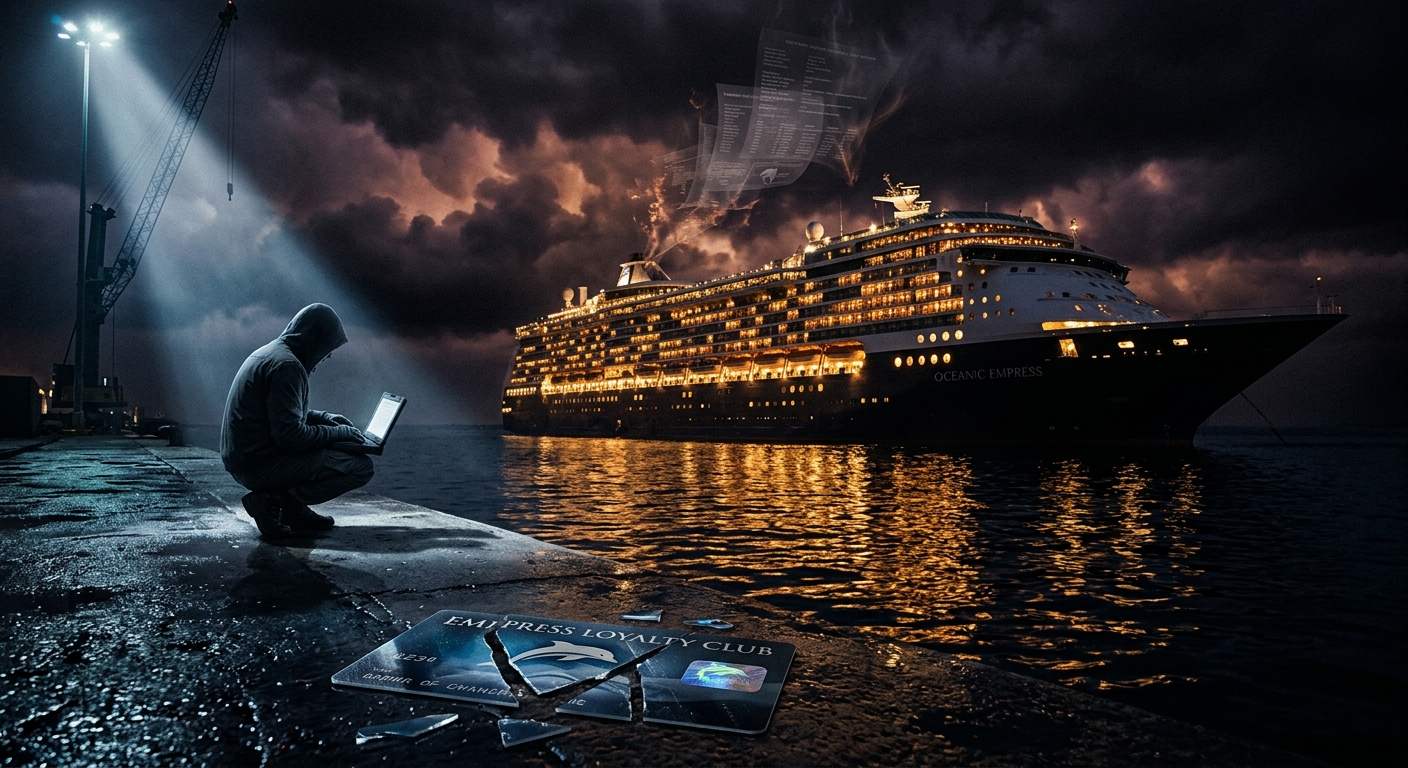
The cruise industry is reeling from another major cybersecurity incident. ShinyHunters — the prolific extortion group behind the Instructure Canvas, Medtronic, and Cushman & Wakefield breaches — added Carnival Corporation to its growing list of victims in late April 2026, claiming the theft of more than 8.7 million records and ultimately publishing the data after ransom negotiations failed.
The Breach: Loyalty Program Data Exposed
ShinyHunters listed Carnival Corporation on its pay-or-leak extortion portal on April 18, 2026, setting an April 21 deadline for the company to make contact. When Carnival did not engage, the group followed through on its threat and publicly released the full dataset.
The stolen records are linked to the Mariner Society loyalty program run by Holland America, one of Carnival’s flagship cruise line brands. The leaked dataset contains approximately 8.7 million records including 7.5 million unique email addresses, along with names, dates of birth, gender, and loyalty program status data.
Carnival confirmed it “detected suspicious activity tied to a phishing incident involving a single user account” and said it “moved quickly to block the unauthorized activity.” The company engaged external security experts to assess the scope of the incident but has not publicly confirmed whether customer data was definitively compromised.
ShinyHunters Claims Broader Theft
ShinyHunters disputed Carnival’s characterization of the breach as limited in scope. The group claimed it did not merely steal customer-facing loyalty data but also exfiltrated terabytes of internal corporate data from deeper within Carnival’s systems.
The group alleged the phishing attack against the single employee account was a pivot point — once inside, they moved laterally across Carnival’s infrastructure before extracting the dataset. No independent forensic verification of the full scope has been published.
Lawsuits Filed Within Days
The data publication triggered swift legal action. Three separate class-action lawsuits were filed against Carnival Corporation between April 22–24, 2026, with plaintiffs arguing the company failed to implement adequate cybersecurity measures to protect customer information. The suits allege that sensitive personal data was not properly encrypted and that Carnival did not have sufficient controls to detect or prevent the kind of phishing attack ShinyHunters described.
The lawsuits follow a pattern seen across major consumer data breaches: affected customers seeking damages for exposure of personal information, the risk of identity theft, and the company’s alleged failure to meet its duty of care to safeguard their data.
A Pattern of Cruise Industry Targeting
This is not Carnival’s first major cybersecurity incident. The company disclosed ransomware attacks in 2020 and additional data breaches in the years that followed. However, the ShinyHunters incident is notable because the group did not deploy traditional ransomware — instead operating as a data extortion operation, exfiltrating files and threatening to publish them rather than encrypting systems.
The travel and hospitality sector holds rich datasets: loyalty program records contain names, contact details, travel histories, and in some cases payment information — making cruise operators attractive targets for financially motivated cybercriminals.
ShinyHunters’ Ongoing Rampage
The Carnival breach is one of several high-profile attacks ShinyHunters has claimed in rapid succession in 2026. The group has also taken credit for:
- Medtronic: 9 million medical records stolen
- Instructure Canvas: 275 million student records from 9,000 educational institutions
- Cushman & Wakefield: 500,000+ Salesforce records via a vishing attack
Security researchers note that ShinyHunters has pivoted away from traditional ransomware deployment toward pure data extortion — a model that requires no encryption capability and is harder to detect before exfiltration has already occurred.
What Affected Customers Should Do
Individuals who hold or have held a Holland America Mariner Society account, or who have sailed with any Carnival Corporation brand, should take the following precautions:
- Monitor for phishing: Leaked email addresses are frequently used in follow-on phishing campaigns impersonating the breached brand
- Check for credential reuse: If the same email and password combination was used elsewhere, change those passwords immediately
- Enable multi-factor authentication on all travel, financial, and email accounts
- Watch for identity theft indicators: Unexpected credit inquiries or new account notifications can signal that stolen PII is being weaponized
Carnival has not publicly announced a notification timeline for affected customers. With class-action litigation now underway, the company faces legal pressure to be more forthcoming about the breach’s full scope and its remediation steps.