The insider threat that exposed America’s most sensitive cyber weapons to a hostile nation
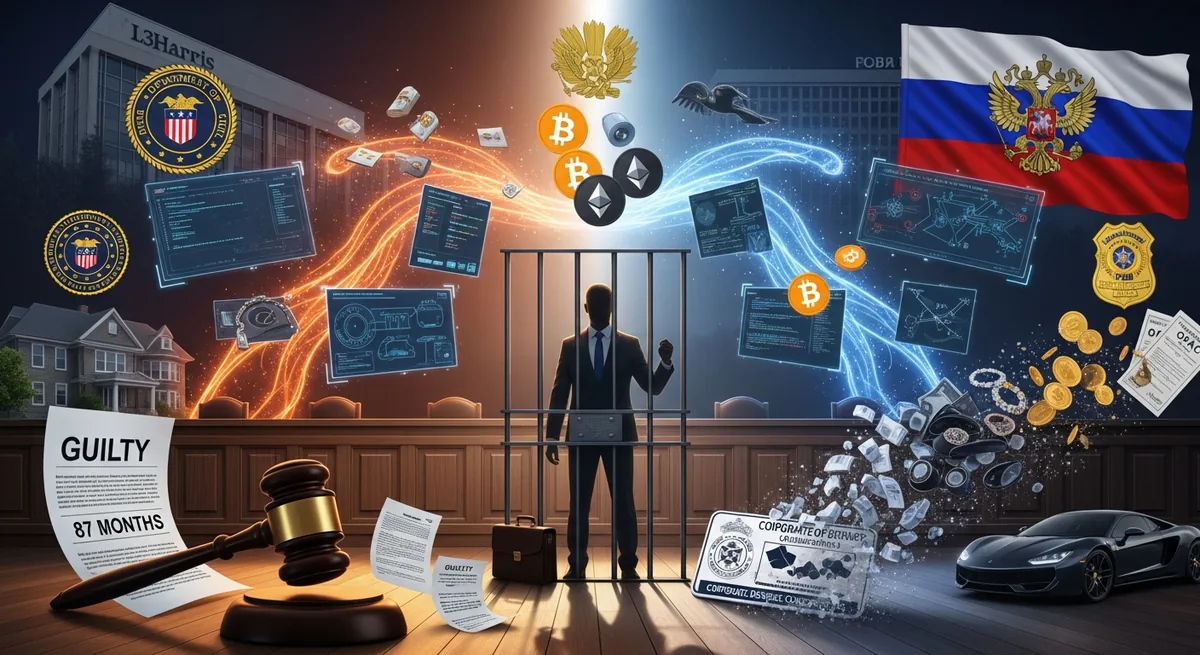
In one of the most significant insider threat cases in U.S. cybersecurity history, federal prosecutors have revealed the full scope of damage caused by a defense contractor executive who sold eight zero-day exploits to a Russian broker. The tools, according to the Department of Justice, were capable of “potentially accessing millions of computers and devices around the world, including in the United States.”
Peter Williams, 39, an Australian national who served as general manager of Trenchant—a division of defense giant L3Harris that develops surveillance and hacking tools for U.S. intelligence agencies—pleaded guilty in October 2025 to stealing and selling the company’s most closely guarded cyber weapons. His sentencing is scheduled for February 24, 2026, where prosecutors are seeking nine years in federal prison.
 Breached CompanyBreached Company
The Scope of the Betrayal
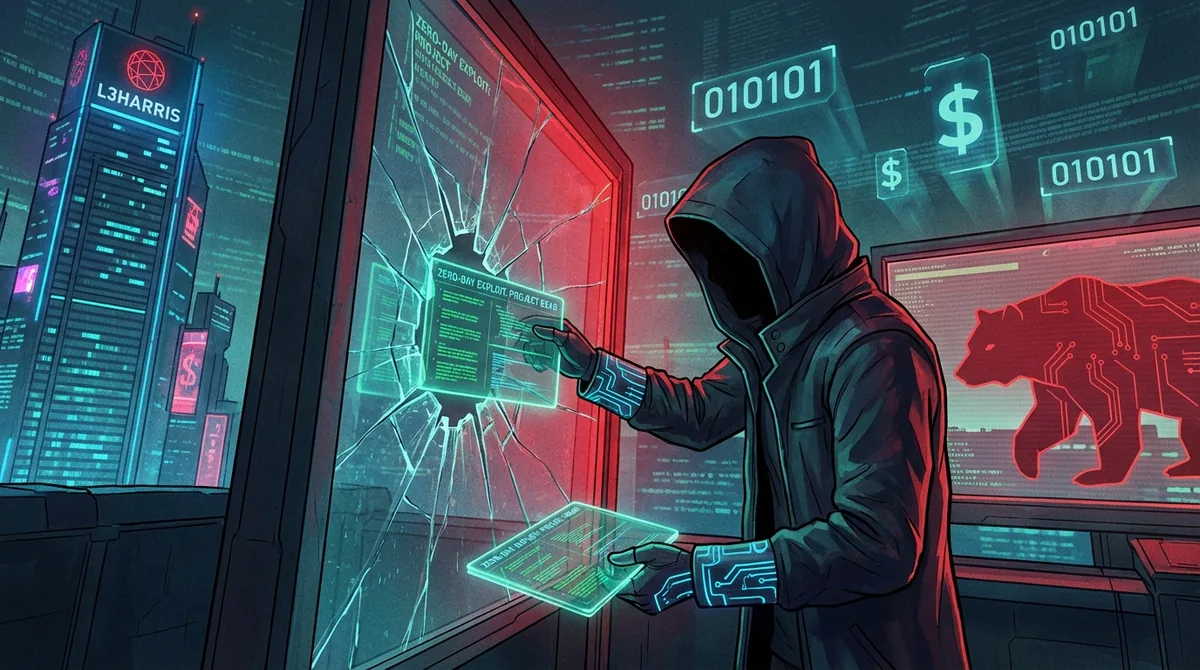
The DOJ’s newly released sentencing memorandum paints a damning picture of calculated treachery. Between April 2022 and August 2025, Williams systematically extracted eight zero-day exploits from Trenchant’s highly secured, air-gapped network and sold them to what prosecutors describe as “one of the world’s most nefarious exploit brokers.”
The buyer is widely believed to be Operation Zero, a Russian company that openly advertises it only sells to the Russian government and Russian organizations. Operation Zero has publicly offered up to $20 million for working exploits targeting Android devices and iPhones—making it one of the highest-paying buyers in the shadowy zero-day market.
Williams received more than $1.3 million in cryptocurrency for his sales. But the damage to national security—and to Trenchant—far exceeded his personal gain. Prosecutors estimate the company suffered losses exceeding $35 million.
How He Did It
The mechanics of Williams’ theft reveal a chilling exploitation of insider access. As general manager, Williams had privileged access to Trenchant’s most sensitive research and development operations. The exploits he stole—technically known as zero-days because the affected software vendors had no time to develop patches—represented years of research and millions of dollars in development costs.
What makes this case particularly egregious is that Williams continued his activities even while overseeing Trenchant’s internal investigation into the very thefts he was committing. FBI agents had been in contact with Williams from late 2024 until his arrest in mid-2025, during which time he was supposedly leading the company’s efforts to identify the source of the leaks.
“The defendant was literally investigating himself,” one former intelligence official told reporters.
The Scapegoat
Perhaps the most troubling aspect of the case involves an innocent Trenchant employee who was falsely blamed and fired for Williams’ crimes.
Prosecutors confirmed that Williams “stood idly by while another employee of the company was essentially blamed for the Defendant’s own conduct. He looked on while an internal corporate investigation falsely cast blame on his subordinate.”
The fired employee later received a notification from Apple that his iPhone had been targeted with government spyware—a disturbing development that remains unexplained. The employee initially believed he had been made a scapegoat, a suspicion that proved accurate when Williams was formally charged.
The Russian Connection
The Russian broker that purchased Williams’ stolen exploits operates openly, despite international sanctions and export controls designed to prevent exactly this kind of transfer.
Operation Zero’s website states explicitly that it sells exclusively to the Russian government and Russian organizations. The company has advertised bounties of up to $20 million for mobile device exploits—dwarfing the payouts offered by legitimate bug bounty programs.
Prosecutors noted that Williams chose this particular broker because, “by his own admission, he knew they paid the most.”
The implications for national security are severe. The exploits Williams sold could enable:
- Government surveillance operations against U.S. citizens and allies
- Cybercrime campaigns including ransomware and financial fraud
- Espionage activities targeting critical infrastructure
- Offensive cyber operations against Western nations
What This Means for CISOs
The Williams case offers critical lessons for security leaders across every industry:
1. Insider Threats Remain the Greatest Risk
Despite Trenchant’s air-gapped networks and classified operations, a trusted insider with sufficient access was able to exfiltrate the company’s crown jewels over a three-year period. Traditional perimeter defenses are meaningless against privileged insiders acting with malicious intent.
2. Behavioral Monitoring Is Essential
Williams exhibited several warning signs that, in retrospect, should have triggered investigation:
- Unusual access patterns to sensitive systems
- Financial pressures (though not specified in court documents)
- The very fact that he led an investigation that never identified the actual perpetrator
User and Entity Behavior Analytics (UEBA) solutions can detect anomalous access patterns that might indicate insider threat activity.
3. Zero Trust Must Include Personnel
The zero trust model typically focuses on network architecture and system access. But Williams’ case demonstrates that personnel themselves must be subject to continuous verification, particularly those with access to the organization’s most sensitive assets.
4. Compartmentalization Limits Blast Radius
Organizations handling extremely sensitive intellectual property should implement strict compartmentalization. No single individual should have access to all critical assets. Williams’ ability to steal eight separate exploits suggests insufficient segregation of duties.
5. Independent Investigations Are Critical
Allowing a potential suspect to lead their own investigation is an obvious failure. Organizations should ensure that insider threat investigations are conducted by independent teams with no potential conflict of interest.
The Exploit Market
Williams’ case provides a rare window into the murky world of zero-day trading. The market operates at the intersection of legitimate security research, government intelligence operations, and criminal enterprise.
Key Players in the Exploit Market:
Category Examples Typical Buyers
Government Programs NSA TAO, GCHQ Own government
Defense Contractors Trenchant, Azimuth, Crowdfense Allied governments
Commercial Brokers Zerodium, Operation Zero Various governments
Bug Bounty Platforms HackerOne, Bugcrowd Software vendors
The price differential explains Williams’ motivation. While legitimate bug bounty programs might pay $100,000-$500,000 for a critical mobile exploit, Operation Zero publicly advertises payouts of up to $20 million.
Regulatory and Legal Response
Williams faces severe consequences:
- Prison sentence: Prosecutors seeking 9 years
- Restitution: $35 million mandatory
- Fine: Up to $250,000
- Deportation: To Australia after serving sentence
- Supervised release: 3 years post-prison
The case is likely to prompt renewed scrutiny of export controls on cyber weapons. The Wassenaar Arrangement, an international framework governing dual-use technologies, has struggled to keep pace with the rapidly evolving exploit market.
Timeline of Events
Date Event
April 2022 Williams begins selling exploits to Russian broker
Late 2024 FBI initiates contact with Williams
Mid-2025 Williams arrested after FBI executes search warrants
August 6, 2025 FBI confronts Williams with evidence
October 2025 Williams pleads guilty to two counts of theft of trade secrets
February 2026 DOJ releases sentencing memorandum revealing full scope
February 24, 2026 Scheduled sentencing
Conclusion
The Williams case represents a catastrophic failure of insider threat detection at one of America’s most sensitive cyber weapons developers. The exploits he sold—capable of compromising millions of devices worldwide—are now presumably in the hands of Russian intelligence services.
For CISOs and security leaders, this case is a stark reminder that the greatest threats often come from within. The most sophisticated technical defenses are useless against a trusted insider with malicious intent and sufficient patience.
As one former NSA official noted: “This is exactly why insider threat programs exist. Unfortunately, it takes cases like this to remind organizations why they matter.”