Higher Education Under Siege: The 2025 University Data Breach Crisis


From Ivy League to For-Profit: How Clop's Oracle Campaign and Social Engineering Attacks Have Exposed Millions of Student Records
December 31, 2025
Executive Summary
The 2025 academic year will be remembered as one of the most devastating periods for higher education cybersecurity in history. A perfect storm of zero-day exploits, sophisticated social engineering campaigns, and chronic underfunding of university security programs has resulted in breaches affecting tens of millions of students, faculty, staff, alumni, and donors across dozens of institutions.
 Breached Company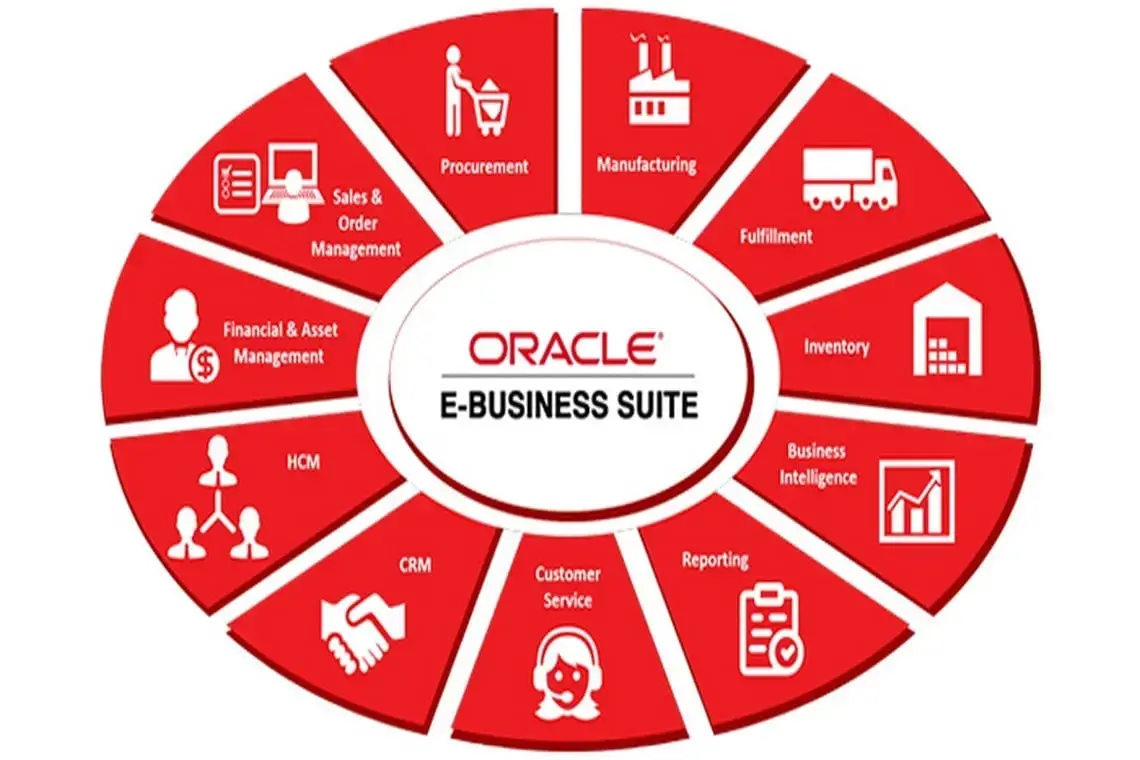
The numbers tell a sobering story:
| Institution | Records Affected | Attack Vector | Threat Actor |
|---|---|---|---|
| University of Phoenix | 3.5 million | Oracle EBS Zero-Day | Clop |
| Columbia University | 870,000 | Phone Phishing | Unknown |
| Harvard University | 1.3 TB data | Oracle EBS Zero-Day | Clop |
| University of Pennsylvania | 1.2 million | Email Compromise | Unknown |
| Yale New Haven Health | 5.6 million | Network Intrusion | Unknown |
| Baker University | 53,000+ | Oracle EBS | Clop |
| Dartmouth College | 35,000+ | Oracle EBS Zero-Day | Clop |
| Princeton University | Undisclosed | Phone Phishing | Unknown |
This analysis examines the converging threats facing higher education and provides actionable intelligence for institutions seeking to defend against these sophisticated campaigns.
The Clop Oracle EBS Campaign: A Supply Chain Attack of Historic Proportions
Understanding CVE-2025-61882
At the center of this year's university breach epidemic sits a single critical vulnerability: CVE-2025-61882, a flaw in Oracle's E-Business Suite that earned a near-perfect CVSS score of 9.8. The vulnerability allows unauthenticated remote attackers to take control of the Oracle Concurrent Processing component via HTTP—no credentials required, no user interaction needed.
Affected versions span Oracle EBS 12.2.3 through 12.2.14, specifically within the BI Publisher Integration component. For higher education institutions, this represented a catastrophic exposure: Oracle EBS serves as the financial backbone for many universities, handling everything from tuition processing and payroll to vendor payments and student aid disbursements.
As documented in our comprehensive analysis of Clop's Oracle rampage, the attack chain followed a methodical pattern:
- Initial Access: Exploitation of CVE-2025-61882 through server-side request forgery (SSRF)
- Credential Harvesting: Abuse of Oracle EBS default password reset functionality
- Data Collection: Systematic extraction of financial, HR, and student records
- Exfiltration: Mass data theft using hundreds of compromised accounts
- Extortion: Addition to Clop leak site with ransom demands reaching seven and eight figures
The University of Phoenix: 3.5 Million Records Compromised
The most recent—and largest—university victim of Clop's Oracle campaign is the University of Phoenix, which disclosed on December 23, 2025, that 3.5 million current and former students, employees, faculty, and suppliers had their personal information exposed.
According to the institution's SEC filing, attackers exploited CVE-2025-61882 between August 13 and August 22, 2025—weeks before Oracle even acknowledged the zero-day's existence. The breach wasn't discovered until November 21, when Clop added the university to its data leak site, meaning attackers had approximately three months of dwell time before detection.
The compromised data includes:
- Full names and contact information
- Dates of birth
- Social Security numbers
- Bank account and routing numbers
What makes this breach particularly significant is its timing relative to Oracle's emergency patch release on October 4, 2025. The University of Phoenix, with 82,700 enrolled students and 3,400 employees, represents exactly the kind of complex enterprise environment where emergency patches face deployment challenges. As we analyzed in our coverage of Baker University's breach, institutions face impossible choices between operational continuity and security when zero-days emerge in critical business systems.
The Full Scope: Universities Caught in Clop's Net
The University of Phoenix joins a growing list of educational institutions confirmed as Clop victims in the Oracle EBS campaign:
Harvard University – Listed on Clop's leak site October 12, 2025, with 1.3 TB of data subsequently published. Harvard confirmed the breach affected "a limited number of parties associated with a small administrative unit," though the actual data exposure included financial, HR, customer, supplier, and potentially research data.
Dartmouth College – Compromised August 9-12, 2025, with attackers stealing Social Security numbers and bank account details from over 35,000 individuals. Clop published 226GB of stolen data after the institution refused to pay.
University of Pennsylvania – Confirmed an Oracle EBS breach affecting staff and students as part of the same campaign.
Tulane University and the University of the Witwatersrand (South Africa) – Both listed as non-paying victims on Clop's leak site.
Beyond education, Clop's Oracle campaign has claimed victims across every sector: Abbott Laboratories, American Airlines subsidiary Envoy Air, Broadcom, Cox Enterprises, GlobalLogic, Logitech, The Washington Post, Schneider Electric, Britain's National Health Service, and—in a particularly ironic twist—Oracle itself.
 Breached Company
The Parallel Crisis: Social Engineering Attacks on Elite Universities
While Clop executed its technical exploitation campaign, a separate wave of sophisticated social engineering attacks targeted elite American universities. As we documented in our analysis of the Ivy League breach epidemic, four of eight Ivy League schools disclosed major breaches within six months—not from technical vulnerabilities, but from phone calls.
Vishing: The Human Vulnerability
The attacks shared a common vector: voice phishing (vishing) calls to university employees. Rather than exploiting software flaws, attackers manipulated human psychology to obtain legitimate credentials.
Harvard's Alumni Affairs Breach – On November 18, 2025, Harvard discovered its Alumni Affairs and Development Office systems had been compromised through a phone-based phishing attack. For an institution that typically raises more than $1 billion annually, the development database represented an extraordinarily valuable target. Donor names, contact information, giving histories, and wealth screening data were all potentially exposed.
Princeton's Advancement Database – Phone phishers targeted a Princeton employee with ordinary database access on November 10, 2025. The attackers compromised biographical information about alumni, donors, students, and community members including names, email addresses, phone numbers, and home and business addresses. Princeton's incident response team discovered and ejected the attackers within 24 hours—a relatively fast response, though not before data had been exfiltrated.
Columbia's Catastrophic Compromise – The most severe social engineering breach affected Columbia University, where attackers spent over two months infiltrating systems after an initial phone phishing compromise. The politically motivated hacker claimed to have accessed 870,000 individuals' records including Social Security numbers, health information, financial aid records, and admissions data. The attacker stated their motivation was exposing alleged continued use of race-based admissions practices following the 2023 Supreme Court ruling against affirmative action.
UPenn's Mass Email Attack – As we detailed in our UPenn email system analysis, attackers who compromised UPenn's Salesforce Marketing Cloud platform sent inflammatory mass emails to thousands of students, alumni, faculty, and staff on October 31, 2025. The emails threatened to leak student data protected under FERPA and contained politically charged rhetoric about admissions practices.
Why Social Engineering Works Against Universities
Educational institutions face unique social engineering vulnerabilities:
Open Culture: Academic environments traditionally prioritize accessibility and open communication, which conflicts with security best practices. Faculty and staff are accustomed to fielding calls from unknown parties—prospective students, researchers, media, alumni.
Decentralized Authority: Unlike corporate environments with centralized IT governance, universities operate as collections of semi-autonomous departments, schools, and research centers. Security policies that exist in theory often face inconsistent implementation across hundreds of organizational units.
High Turnover: Student workers with database access graduate and move on. Adjunct faculty may teach at multiple institutions. Research assistants cycle through labs. This constant churn creates persistent gaps in security training.
Valuable Targets: University development offices maintain detailed profiles on wealthy donors. Research institutions hold intellectual property worth billions. Healthcare affiliates (like Yale New Haven Health) store protected health information. Admissions offices hold data that foreign intelligence services have shown interest in obtaining.
 Breached Company
The K-12 Connection: Educational Cybersecurity's Systemic Crisis
The crisis extends beyond higher education. As we documented in our analysis of school cyberattacks plaguing the 2025 academic year, K-12 institutions face many of the same challenges with even fewer resources.
The PowerSchool breach exemplified the risks: in late 2024, attackers used compromised credentials belonging to a technical support subcontractor to access PowerSchool's customer support portal, potentially exposing data from the platform's 60 million student users. One cybersecurity expert described it as "close to a worst-case scenario" due to PowerSchool's widespread adoption.
Industry statistics paint a grim picture:
- 4,388 weekly cyberattacks per school globally (education is now the most attacked sector)
- 82% of K-12 schools experienced a cyber incident between July 2023 and December 2024
- $3 million+ average cost per breach for higher education institutions
- 69% surge in ransomware attacks against the global education sector in Q1 2025
- 57% of education insider threat incidents caused by students
Why This Keeps Happening: Structural Vulnerabilities in Higher Education Security
The Resource Gap
Carl Froggett, CIO at Deep Instinct, captured the fundamental challenge: "Higher-education institutions were never built to function as full-scale cyber defense operations, yet they are expected to protect research, students, employees, and operational data from both known and unknown threats."
University IT departments typically report to administrative leadership focused on cost containment, not security investment. When budgets tighten, security staffing, training, and tooling face cuts before visible services like student support or campus facilities.
The numbers reflect this reality:
- 66% of universities lack basic email security configurations
- 23% of top 500 universities had at least one open RDP port exposed to the internet
- 616 average domains per top 500 university (vs. 244 average for all universities)—larger attack surfaces correlate with larger breach exposure
The Third-Party Problem
Modern universities depend on hundreds of third-party vendors: learning management systems, financial aid processors, student information systems, research data platforms, email marketing tools, donor management databases. Each vendor relationship represents a potential attack vector.
As Froggett warned: "The attack surface is no longer just your environment; it is every environment you depend on."
The Oracle EBS campaign demonstrated this precisely—universities with perfectly configured perimeter defenses still fell victim because their trusted financial software contained a zero-day. The PowerSchool breach showed how a subcontractor's compromised credentials could expose data across thousands of school districts.
The Detection Gap
The University of Phoenix discovered its August breach in November—a three-month dwell time. Baker University's December 2024 attack wasn't fully characterized until forensic analysis completed in October 2025. Yale New Haven Health detected its breach on the same day it occurred (March 8, 2025), demonstrating that effective monitoring is possible but rare.
Long dwell times allow attackers to:
- Map network architecture and identify high-value data stores
- Establish persistence mechanisms that survive initial remediation
- Exfiltrate data gradually to avoid triggering volume-based alerts
- Identify additional targets within partner networks
Lessons and Recommendations
For University Leadership
Treat Cybersecurity as Existential Risk: A major breach can cost millions in incident response, notification, credit monitoring, legal fees, and regulatory penalties. The Yale New Haven Health settlement alone reached $18 million. Beyond direct costs, reputational damage affects enrollment, donations, and research partnerships for years.
Invest in Detection: The difference between same-day detection (Yale New Haven Health) and three-month detection (University of Phoenix) represents the difference between a contained incident and a catastrophic breach. Endpoint detection and response (EDR), network monitoring, and security operations center (SOC) capabilities should be funded as essential infrastructure, not optional enhancements.
Prioritize Patch Management for Critical Systems: Oracle EBS, and enterprise resource planning systems generally, require dedicated patch management programs. Emergency patches should have pre-planned deployment procedures and testing environments ready.
For Security Teams
Assume Third-Party Compromise: Design architectures assuming that vendors will be breached. Implement least-privilege access for vendor integrations. Monitor for anomalous behavior from trusted connections.
Train for Social Engineering: The most sophisticated technical controls fail when an employee provides credentials over the phone. Phishing simulations should include voice phishing scenarios. Establish verification procedures for sensitive requests regardless of apparent authority.
Reduce Attack Surface: The correlation between domain count and breach probability is clear. Consolidate legacy systems. Decommission unused web applications. Close unnecessary ports.
For Students and Staff
Monitor Your Credit: If you've attended, worked for, or donated to an American university in the past decade, your data has likely been exposed in at least one breach. Credit monitoring and fraud alerts are essential precautions, not paranoia.
Verify Before You Trust: Universities will never call and ask for your password, MFA codes, or Social Security number. Any such request should be reported to IT security immediately.
What Comes Next
The Clop Oracle EBS campaign continues to produce new victim disclosures weeks after Oracle's patches became available. Organizations compromised before October 2025 are still discovering the extent of their exposure. We expect additional university breach disclosures through early 2026.
Meanwhile, the social engineering attacks targeting elite universities appear politically motivated and timed to ongoing debates about admissions practices. These attacks may intensify as institutions face congressional scrutiny and litigation over DEI policies.
For the education sector, 2025 demonstrated that neither technical sophistication nor institutional prestige provides protection against determined attackers. The question facing university leadership is whether 2026's breach headlines will include their institutions—and what they're willing to invest to change those odds.
Related Coverage
- University of Phoenix and Baker University Join Growing List of Oracle EBS Breach Victims
- The Perfect Supply Chain Storm: How Clop's Oracle Rampage Exposes Hidden Vulnerabilities
- Hackers Strike US Ivy League Schools Already Under Political Pressure
- UPenn Email System Compromised: Hackers Send Inflammatory Messages
- Educational Institutions Under Siege: New Haven Phishing Attack
- School Cyberattacks Plague Start of 2025 Academic Year
- School Cyberattacks: A Growing Crisis Threatening Student Data
- Yale New Haven Health Settles for $18 Million Following 5.6 Million Patient Breach
- Virginia Tech Data Breach: What You Need to Know
- Major Cyber Attacks 2025: Comprehensive Analysis
Technical Indicators
CVE-2025-61882
- CVSS: 9.8 (Critical)
- Affected: Oracle E-Business Suite 12.2.3–12.2.14 (BI Publisher Integration)
- Attack: Unauthenticated remote code execution via HTTP
- Status: Patched October 4, 2025
CVE-2025-61884
- CVSS: Critical
- Affected: Oracle E-Business Suite
- Attack: Second zero-day in attack chain
- Status: Patched October 11, 2025
Clop/Cl0p Attribution Indicators
- Also tracked as: TA505, FIN11, Graceful Spider
- Previous campaigns: Accellion FTA (2020-2021), GoAnywhere MFT (2023), MOVEit (2023), Cleo (2024)
- Current campaign: Oracle EBS (2025)
- U.S. Department of State: $10 million reward for information linking attacks to foreign government
This article will be updated as additional breaches are disclosed. For incident response resources, visit Incident Response Tools or use our How Safe Is My School? assessment.