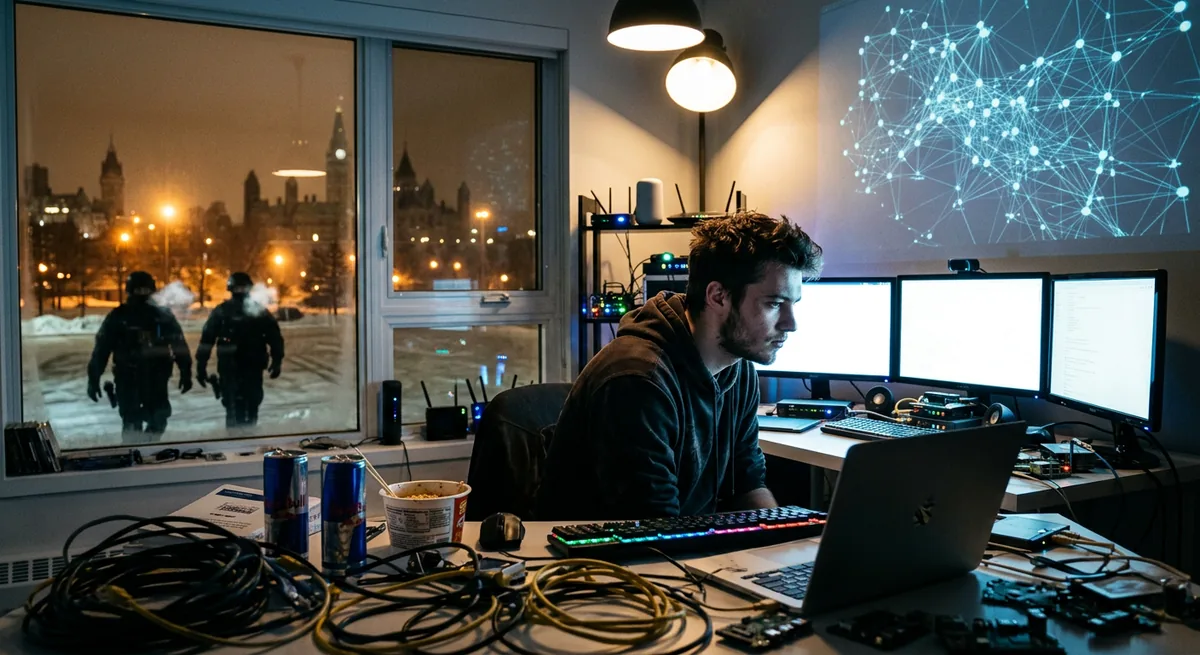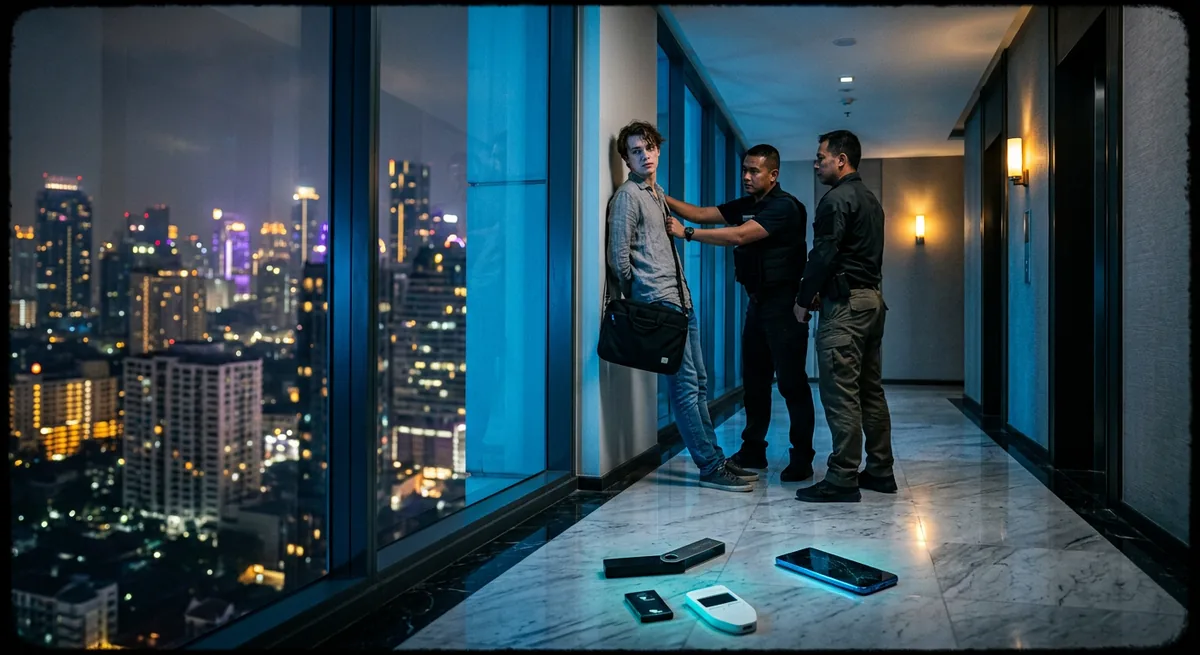
A 26-year-old German national wanted on 74 cybercrime warrants has been arrested in a luxury Bangkok condominium, ending a years-long run during which he allegedly operated two of the booter market’s busier DDoS-for-hire platforms while hopping between Dubai, China, and Thailand to stay ahead of European police.
Noah Christopher was detained on April 10, 2026, at a high-end residence on Soi Thonglor 25 in Bangkok’s Watthana district, following a joint operation between Thailand’s Cyber Crime Investigation Bureau, immigration police, and international partners. His residency permit had been revoked the day before under Section 12(7) of Thailand’s Immigration Act — the provision covering foreigners subject to arrest warrants abroad — clearing the way for the takedown and the extradition process now underway.
The platforms: attacks on demand
According to authorities, Christopher built and ran Fluxstress and Netdowner, two cybercrime-as-a-service platforms that sold distributed denial-of-service attacks to anyone willing to pay in cryptocurrency. The model is the defining product of the modern booter economy: a customer with no technical skill picks a target, selects an attack duration and volume, pays in crypto, and the platform’s backend infrastructure floods the victim’s website or server with junk traffic until it collapses.
The 74 warrants — issued by German authorities and the European Union between 2021 and 2025 for cyber extortion and online hacking — reflect the scale of the operation’s customer base rather than 74 separate masterminds. Booter services like Fluxstress are force multipliers: a single platform can be the instrument behind hundreds or thousands of individual attacks, each one a chargeable offense against a different victim. The sheer warrant count is what happens when one piece of infrastructure underpins years of attacks across an entire continent.
A fugitive’s circuit
What distinguishes this case is the chase. Christopher did not sit still. Investigators say he rotated between Dubai, China, and Thailand, exploiting the gaps between jurisdictions and the friction of international extradition to keep moving. That itinerary is a familiar one for cybercriminals who have outgrown the protection of a single safe haven but haven’t been physically located — they live in transit, betting that no single country will assemble the paperwork and political will to grab them.
The bet failed in Bangkok. A formal request from international agencies triggered an intensive tracking effort in the Thonglor area, where investigators pinned down his residence before immigration officers moved in. With his permit revoked and German extradition preparations begun, the circuit has closed.
Part of a sustained war on booters
Christopher’s arrest fits squarely into the longest-running campaign in cybercrime enforcement: the grinding, multi-year effort to dismantle the DDoS-for-hire market. We chronicled the global dimension of that fight in our coverage of Operation PowerOFF, the international crackdown on criminal DDoS services, and the demographic reality behind it in the story of the Polish teen DDoS crew CBZC, where the operators were minors.
The infrastructure side of the same war played out when Germany’s BKA dismantled the Aisuru and Kimwolf botnets — the kind of compromised-device armies that often power the very attacks booter platforms resell. Take down the botnets and you starve the booters of firepower; arrest the booter operators and you remove the storefronts. Both halves are necessary, and Christopher’s case is the storefront half.
Why booters keep mattering
It’s tempting to dismiss DDoS-for-hire as low-stakes nuisance crime next to ransomware and nation-state espionage. That underestimates the damage. Booter platforms democratize disruption — they put the ability to knock a hospital, school, government portal, or small business offline into the hands of anyone with a grudge and a few dollars in crypto. They are the on-ramp through which a generation of young offenders enters cybercrime, and they cause real, cumulative economic harm one outage at a time.
That is precisely why authorities keep prioritizing them. Every operator extradited and every platform seized raises the cost of running one and shrinks the menu available to the next angry customer. Christopher’s 74 warrants are a measure of how much disruption a single well-run platform can wholesale — and his arrest is a reminder that the transit-lounge life of an international cyber-fugitive eventually runs out of connecting flights.