International law enforcement has taken down one of the most durable initial-access engines in the ransomware economy. On June 18, 2026, a coalition led by the Netherlands’ National High-Tech Crime Unit (NHTCU), the FBI, Germany’s BKA, and the Royal Canadian Mounted Police, with coordination from Europol, announced the disruption of SocGholish — the fake-browser-update malware framework operated by the threat actor tracked as TA569. The action seized more than 100 servers and domains and remotely cleaned infections from 14,971 compromised WordPress sites.
The operation is the newest chapter in Operation Endgame, the running multinational campaign that has spent the past two years dismantling the malware delivery infrastructure feeding Europe’s ransomware crews. Threat-intelligence firm Proofpoint, which has tracked SocGholish since 2018, provided the technical intelligence underpinning the takedown.
What SocGholish did
SocGholish is not ransomware itself — it is the doormat ransomware walks in on. The framework compromises legitimate websites, overwhelmingly WordPress installations, and injects them with fake browser-update lures. A visitor lands on a trusted site, sees a convincing “Your Chrome is out of date” prompt, and downloads a JavaScript payload that hands the operators a foothold on the machine.
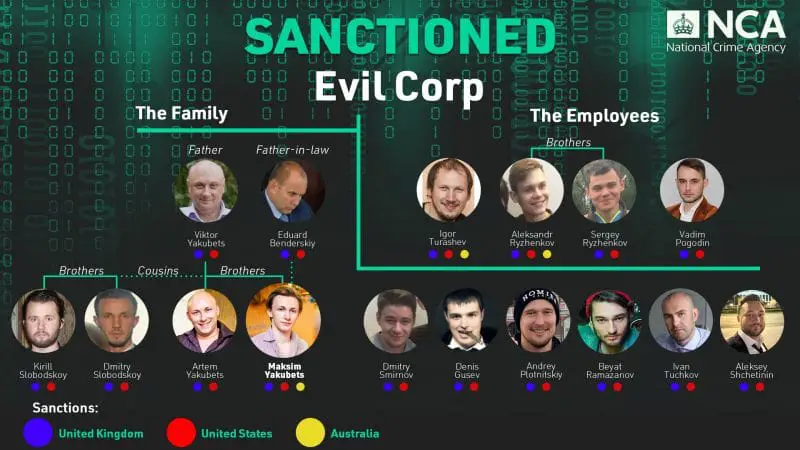
From there, TA569 acts as an initial access broker (IAB): it does not deploy the final payload, it sells the access. Public reporting has linked SocGholish-derived access to Evil Corp, the Russian cybercriminal group whose members have been sanctioned multiple times by the US Treasury’s OFAC, and the infection chain has historically delivered Dridex, WastedLocker, and other ransomware families downstream. Breaking SocGholish therefore degrades not one gang but every crew that bought its access.
Why the WordPress cleanup matters
The headline number — 14,971 cleaned WordPress sites — is what separates this action from a simple server seizure. Rather than only pulling the operators’ own infrastructure offline, investigators reached into the compromised intermediary sites that hosted the malicious injects and remediated them, severing the lure at the point where victims actually encountered it. That is the same proactive-remediation posture we are now seeing law-enforcement agencies adopt elsewhere, including Canada’s first-of-its-kind warrant to clean botnet-infected devices.
Operation Endgame’s expanding ledger
SocGholish slots into a takedown campaign that has steadily widened its aperture from malware loaders to bulletproof hosts to access brokers. The pattern across breached.company’s coverage is consistent: hit the infrastructure layer that every ransomware affiliate depends on, not the affiliates one at a time.
- November 14, 2025 — Operation Endgame strikes again: 1,025 servers dismantled in a coordinated takedown of Rhadamanthys, VenomRAT, and Elysium.
- November 16, 2025 — Operation Endgame continues: the CrazyRDP bulletproof hoster dismantled as Dutch police seize thousands of servers.
- June 18, 2026 — SocGholish: 100+ servers seized and nearly 15,000 WordPress sites cleaned, cutting an Evil Corp-linked access chain at the source.
The asterisk: SocGholish rebuilds
Every defender should temper the win with history. SocGholish has been remarkably resilient, rebuilding delivery infrastructure quickly after past disruptions, and the broader trend is that takedowns of large ransomware brands tend to fragment them into smaller, more numerous successors rather than eliminate the threat. A 100-server seizure raises the operators’ costs and buys defenders time; it does not retire TA569.
The durable value is in the intelligence and the precedent. Each Endgame action maps more of the shared backbone the ransomware economy runs on — and normalizes the idea that police will not just seize a server but actively clean the victims downstream of it.
What to do now
- Patch and harden WordPress. SocGholish lives on compromised sites; outdated plugins and weak admin credentials are how it gets there. Audit installed plugins and enforce MFA on wp-admin.
- Block fake-update lures at the endpoint. Browser updates never arrive via a website pop-up. Train users and enforce application-control policies that stop unsigned JavaScript-delivered binaries.
- Hunt for SocGholish indicators. If your users browse compromised sites, look for the characteristic injected scripts and follow-on loader activity in EDR telemetry.
- Treat any SocGholish hit as a ransomware precursor. The framework’s whole purpose is to sell your access onward. A single fake-update infection warrants the same urgency as an early-stage intrusion.
Sources
- Proofpoint — Sayonara, SocGholish: Operation Endgame Disrupts Major Cybercrime Operation
- SecurityAffairs — 14,971 WordPress Sites Cleaned in Global SocGholish Takedown
- Infosecurity Magazine — Operation Endgame Disrupts Malware Linked to Major Ransomware Gang
- Malwarebytes — Nearly 15,000 infected websites cleaned in SocGholish crackdown