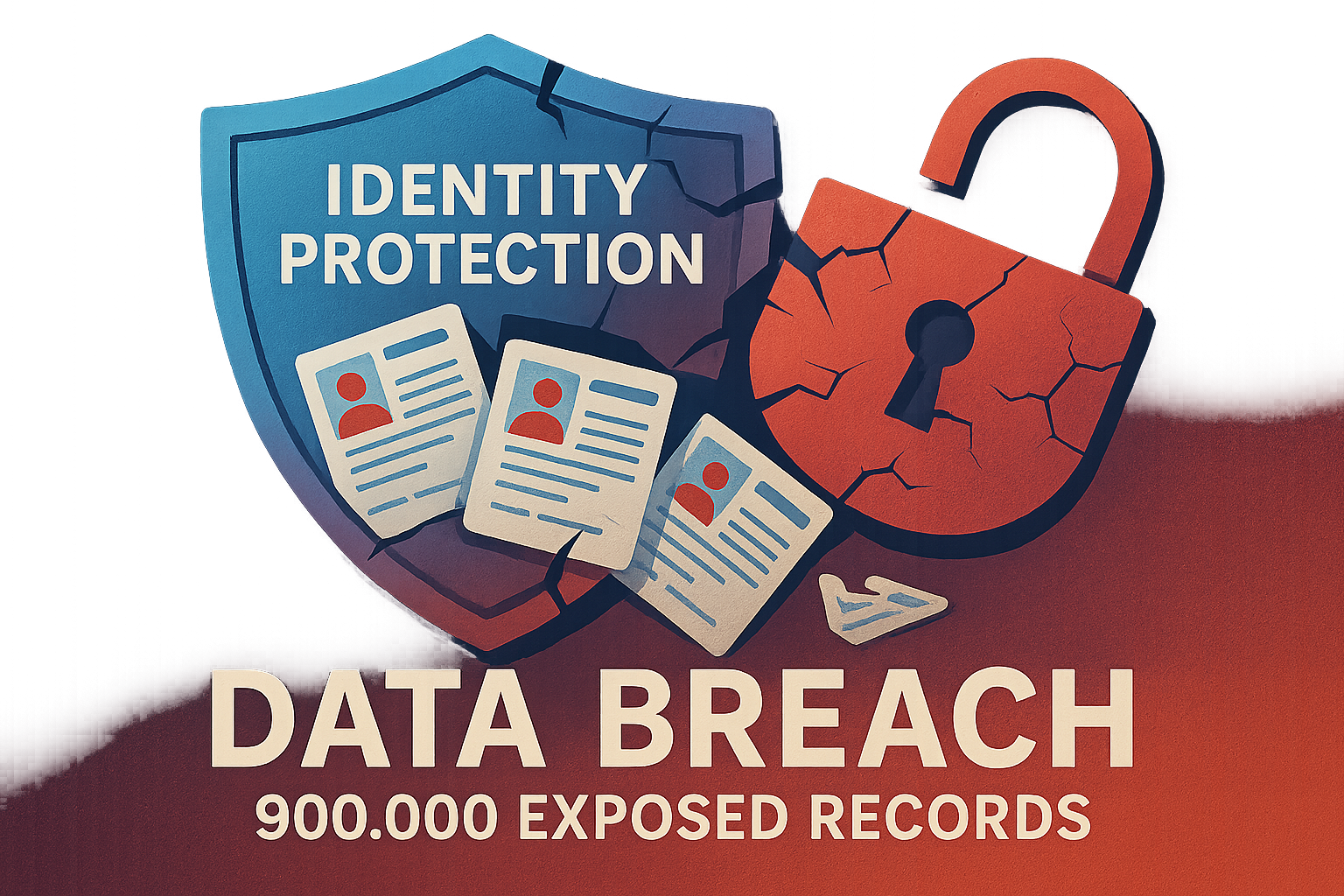
There’s a particular kind of embarrassment reserved for identity protection companies when they become the breach story. Aura — a firm whose entire business model is built on the promise of keeping your personal data safe — has confirmed that an unauthorized party accessed nearly 900,000 records containing names, email addresses, home addresses, and phone numbers. The attack vector? A voice phishing call that fooled one of their own employees. The data source? A marketing tool inherited from a company they acquired five years ago and apparently never fully cleaned up.
If you ever wondered what it looks like when the cobbler’s children have no shoes, this is it.
What Happened
In mid-March 2026, Aura disclosed that a targeted phone phishing attack — known as vishing, where attackers impersonate trusted parties over voice calls rather than email — tricked an employee into handing over access credentials. With that foothold, an unauthorized party gained access to a third-party marketing database containing contact records.
The notorious hacking group ShinyHunters, responsible for a string of high-profile breaches over the past several years, claimed responsibility for the attack. According to reporting by BleepingComputer, ShinyHunters alleged they had exfiltrated 12 gigabytes of files containing personally identifiable information on customers and corporate data. When Aura declined to pay, ShinyHunters published the data on their extortion site, stating that the company “failed to reach an agreement with them despite all the chances and offers they made.”
Have I Been Pwned (HIBP), the widely used breach notification service, analyzed the leaked dataset and added it to their database, listing just over 901,000 affected accounts. Notably, HIBP found that 90% of the email addresses in the leak were already in their database from previous, unrelated security incidents — suggesting the bulk of this data had already been cycling through the dark web for some time.
Aura says it immediately terminated access to the compromised account upon discovery, activated its incident response plan, brought in external cybersecurity and legal experts, and notified law enforcement. Affected individuals are being notified directly.
What Data Was Exposed
According to Aura’s own statement and data analyzed by Have I Been Pwned, the exposed records include:
- Full names
- Email addresses
- Home addresses
- Phone numbers
- IP addresses
- Customer service comments
Aura is emphatic that Social Security numbers, account passwords, and financial information were not compromised. That’s a meaningful distinction — this is contact data, not the kind of deeply sensitive identity information that directly enables fraud or account takeover. But it’s still a meaningful amount of personal detail, and in the hands of skilled social engineers, contact data is valuable currency.
Of the 900,000 records, Aura says fewer than 20,000 belonged to active customers and fewer than 15,000 to former customers. The remaining 860,000-plus were marketing contacts — people who had never been Aura customers at all.
The Irony Factor
Let’s sit with this for a moment.
Aura’s product lineup reads like a checklist of everything this breach violated. They sell identity theft protection. They sell credit monitoring and fraud alerts. They sell phishing protection. Their marketing regularly emphasizes how exposed people are online and positions Aura as the digital shield standing between regular consumers and the threats lurking in the internet’s shadows.
Their homepage features reassuring language about keeping families safe. Their pitch to customers is essentially: trust us with your personal information and we’ll keep it from falling into the wrong hands.
That pitch just took a significant hit. A vishing attack — the kind of threat Aura regularly warns consumers about in their own blog posts and marketing materials — is precisely what brought down their defenses. An attacker picked up a phone, convinced an Aura employee they were someone they weren’t, and walked away with nearly a million records.
This isn’t a story about an unsophisticated target being blindsided by cutting-edge intrusion techniques. It’s a story about social engineering working on the very people who are supposed to understand social engineering. That’s uncomfortable, and it should be.
The Acquisition Trail
Here’s the detail that makes this breach more complicated than a straightforward hack: the 900,000 records didn’t come from Aura’s core customer database. They came from a marketing tool connected to a company Aura acquired back in 2021.
Aura confirmed that the data “originated from a marketing tool used by a company acquired by Aura in 2021.” The acquisition brought customer relationships, brand assets, and — apparently — a marketing database full of contact records that was still sitting in a third-party tool years after the deal closed.
This is the acquisition debt that rarely makes headlines until something goes wrong. When companies are bought, their data footprints come along for the ride. Legacy systems. Old marketing platforms. CRM databases populated years before the acquiring company’s security standards applied. That inherited data represents inherited risk, and it doesn’t automatically get cleaned up when the deal closes.
Five years after the acquisition, that data was still accessible through a marketing tool, still vulnerable, and still valuable to a threat actor who knew where to look.
What Aura Said
In its official statement, Aura acknowledged the incident while working to limit the narrative damage. The company said it “fell short of its standards” and “reaffirmed its commitment to earning customers’ continued trust.” They noted they don’t expect the incident to “significantly increase the risk” to those affected, given that sensitive financial and identity data wasn’t part of what was accessed.
To their credit, Aura moved quickly on containment: access was terminated immediately, incident response was activated, external experts were brought in, and law enforcement was notified. Direct notifications to affected individuals are underway.
Aura declined to comment to BleepingComputer on ShinyHunters’ broader claims, including allegations of an Okta SSO compromise, which the company has neither confirmed nor denied publicly.
What Affected Users Should Do
If you’ve ever been an Aura customer, used a product from a company Aura acquired, or received marketing communications from Aura or its affiliates, here’s what you should do right now:
Check Have I Been Pwned. Go to haveibeenpwned.com and enter your email address. HIBP has already indexed this breach. If your address shows up, you’re in the dataset.
Watch for phishing attempts. With names, email addresses, phone numbers, and home addresses now potentially in circulation, expect tailored phishing emails and vishing calls that reference your real details to seem more credible. Be skeptical of any unsolicited contact claiming to be from Aura, financial institutions, or government agencies.
Enable multi-factor authentication everywhere. This breach didn’t expose passwords, but if attackers try credential stuffing using previously leaked password databases, MFA is your backstop. Use an authenticator app rather than SMS wherever possible.
Place a fraud alert or credit freeze. Even without SSNs being exposed, contact data enables follow-on social engineering. A credit freeze at all three major bureaus (Equifax, Experian, TransUnion) is free and limits new account fraud.
Be alert for suspicious postal mail. Home addresses were included in the exposed data. Scammers sometimes use mailing addresses for check fraud schemes and physical phishing attempts. Monitor your mail carefully.
Update your Aura password anyway. Even if passwords weren’t compromised in this specific incident, changing credentials after any breach disclosure at a company holding your data is basic hygiene.
The Bigger Pattern
The Aura breach is a case study in a risk pattern that’s becoming increasingly common: the third-party acquisition liability problem.
When companies grow through acquisition — as Aura has done — they inherit the security posture of every company they buy. That includes not just active systems and infrastructure, but dormant marketing databases, old platform integrations, and legacy tools that predate modern security standards. The acquiring company’s security team has to audit, remediate, or decommission all of it.
That’s expensive, time-consuming, and unglamorous work. It doesn’t generate revenue or drive user growth. And in the press of integrating a new acquisition, it often gets deprioritized — until, five years later, a vishing attack reveals that a marketing tool from 2021 is still populated with nearly a million contact records.
ShinyHunters clearly did their reconnaissance. They knew where the data lived. The question worth asking is whether Aura fully knew what they had inherited, and whether the inherited risk had ever been properly evaluated and addressed.
For consumers, the lesson is familiar but worth repeating: your data doesn’t stay with just the company you gave it to. It follows acquisition trails, passes through marketing platforms, and sometimes ends up in databases you’d never expect. The company you trusted in 2019 might have been acquired in 2021, and that data might still be sitting somewhere it shouldn’t be in 2026.
Identity protection starts with the companies that collect your identity data. When they fail — and they do fail, sometimes spectacularly — the burden, as always, falls back on you.
Sources: BleepingComputer, Help Net Security, Have I Been Pwned, Aura official statement (aura.com/press), Bitdefender Hot for Security. Reported March 18–19, 2026.