FBI Wiretap Systems Compromised: Inside Salt Typhoon’s Infiltration of America’s Lawful Intercept Infrastructure
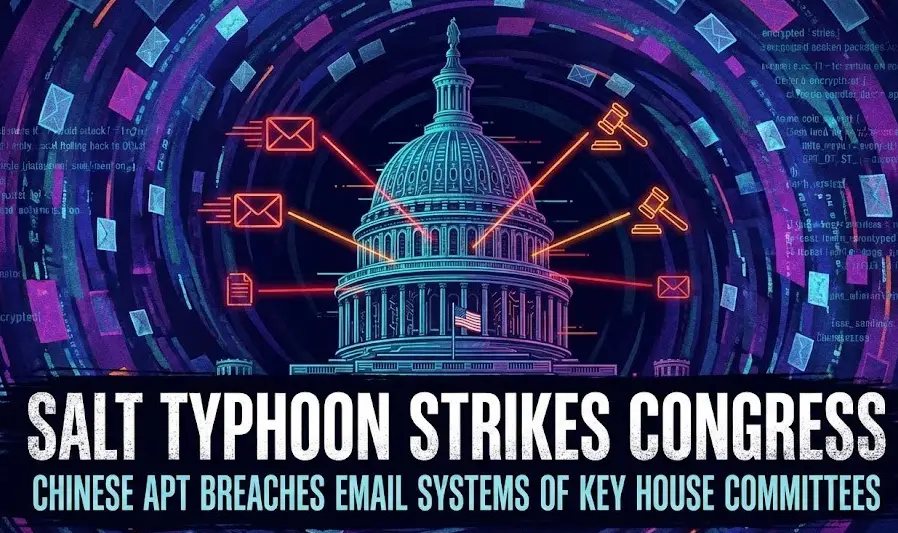
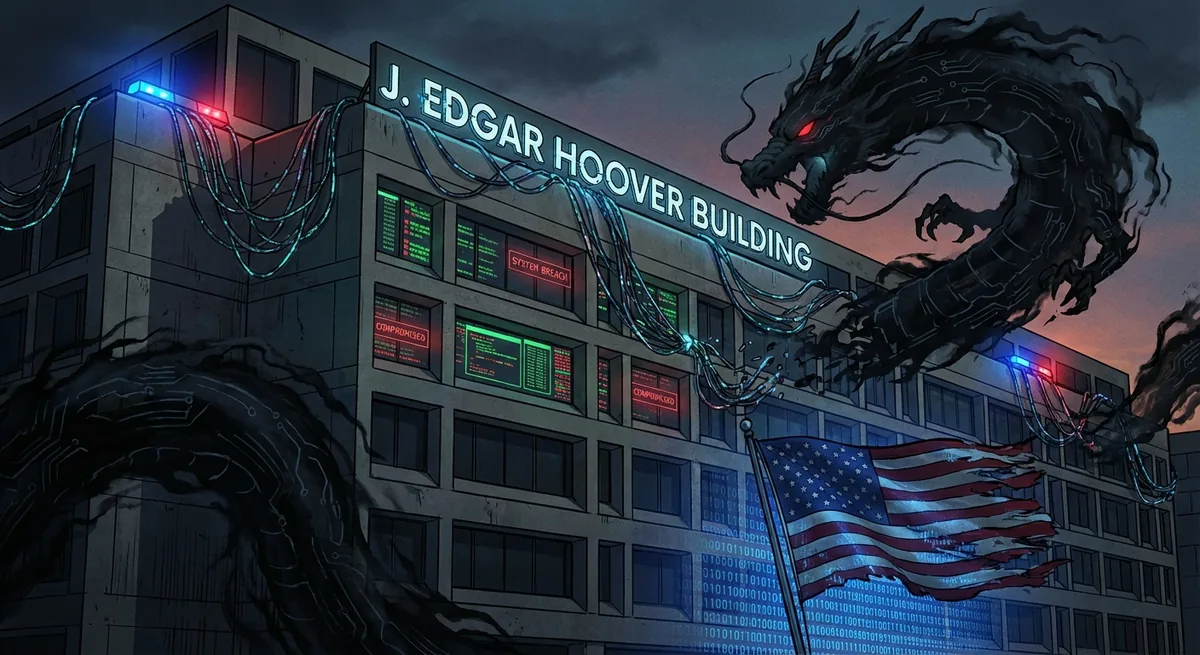
Chinese state hackers didn’t just breach American telecoms—they compromised the very systems the FBI uses to conduct court-authorized surveillance. The implications are staggering.
The Breach That Changed Everything
When cybersecurity investigators first discovered Salt Typhoon’s presence in American telecommunications networks, they assumed it was another espionage operation targeting corporate secrets or customer data. What they found was far worse.
Salt Typhoon—a Chinese state-sponsored hacking group linked to the Ministry of State Security—had infiltrated the CALEA (Communications Assistance for Law Enforcement Act) systems that enable FBI wiretapping. These are the crown jewels of American signals intelligence: the infrastructure that allows law enforcement to intercept communications with court authorization.
The attackers didn’t just have access. According to sources familiar with the investigation, they had been inside for months to years, potentially monitoring which American citizens were under FBI surveillance, what evidence was being collected, and how investigations were progressing.
“This is the nightmare scenario we always feared but never quite believed could happen,” said one former senior FBI official who spoke on condition of anonymity. “They weren’t just listening to Americans. They were listening to us listening to Americans.”
What Is CALEA and Why Does It Matter?
The Communications Assistance for Law Enforcement Act, passed in 1994, requires telecommunications carriers to build surveillance capabilities into their networks. When a court authorizes a wiretap, carriers must be able to provide law enforcement with access to targeted communications.
These systems handle:
- Phone call interception (audio content)
- Text message capture
- Call detail records (who called whom, when, for how long)
- Location data from cell towers
- Internet traffic for certain types of surveillance
CALEA infrastructure is supposed to be among the most secure systems in any telecom’s network. Access is restricted to specialized personnel. Audit trails track every query. The systems are designed to prevent exactly what Salt Typhoon accomplished.
Yet Chinese hackers found their way in.
The Scale of Compromise
According to confirmed reports and government statements, Salt Typhoon’s telecommunications breach affected:
Nine Major U.S. Carriers:
- Verizon
- AT&T
- T-Mobile
- Charter/Spectrum
- Lumen Technologies
- Consolidated Communications
- Windstream
- Plus two additional unnamed providers
More Than One Million Users: Call and text metadata—who communicated with whom, when, and for how long—was accessed for over a million American subscribers.
High-Value Targets:
- President Donald Trump’s phone
- Vice President JD Vance’s phone
- Members of the Harris presidential campaign
- Senior government officials
- Congressional staff members
Global Reach: Beyond the United States, Salt Typhoon compromised telecommunications infrastructure in 80+ countries, affecting at least 200 identified targets internationally.
Inside the Attack: How Salt Typhoon Got In
Initial Access: Edge Device Exploitation
Salt Typhoon’s primary entry points were network edge devices—the routers, firewalls, and VPN appliances that sit between carrier networks and the internet. These devices are attractive targets because:
- They’re internet-facing by design
- They often run complex, vulnerability-prone firmware
- Organizations struggle to patch them quickly
- They provide broad network access once compromised
Key vulnerabilities exploited:
| CVE | Product | Severity |
|---|---|---|
| CVE-2023-20198 | Cisco IOS XE | Critical |
| CVE-2024-3400 | Palo Alto PAN-OS | Critical |
| CVE-2024-21887 | Ivanti Connect Secure | Critical |
| CVE-2018-0171 | Cisco Smart Install | High |
Many of these vulnerabilities had patches available. Some had been publicly disclosed for months. Yet carriers—even those with sophisticated security programs—failed to remediate them before Salt Typhoon walked through the open doors.
Persistence: The Demodex Rootkit
Once inside, Salt Typhoon deployed a Windows kernel-mode rootkit dubbed “Demodex” by researchers. Kernel-mode rootkits operate at the deepest level of the operating system, below where most security tools can detect them.
Demodex provided:
- Persistent access surviving reboots
- Ability to hide files, processes, and network connections
- Credential harvesting capabilities
- Lateral movement tools
Lateral Movement: Living Off the Land
Like their Volt Typhoon counterparts, Salt Typhoon operators favored “living off the land” techniques—using legitimate administrative tools rather than custom malware. This approach:
- Evades signature-based detection
- Blends with normal administrative activity
- Leaves fewer forensic artifacts
- Makes attribution more difficult
Commands that would raise alarms if run by malware—but appear routine when executed by what looks like an authorized administrator—carried out the most sensitive operations.
Accessing CALEA Systems
The path to CALEA infrastructure reportedly involved:
- Compromising network management systems
- Harvesting credentials from privileged administrators
- Mapping internal network architecture
- Identifying and accessing lawful intercept systems
- Extracting surveillance data and capabilities
The exact technical details remain classified, but the outcome is clear: Chinese intelligence gained visibility into active FBI investigations.
The Intelligence Goldmine
For Chinese intelligence, access to CALEA systems provides extraordinary value:
Counterintelligence Advantage
If you know who the FBI is investigating, you know:
- Which of your operations they’ve detected
- Which of your assets might be compromised
- How close they are to disrupting your activities
- What evidence they’ve gathered
This allows you to:
- Warn agents under surveillance
- Modify operations to avoid detection
- Feed disinformation through monitored channels
- Assess the effectiveness of your security measures
Operational Intelligence
Beyond counterintelligence, CALEA access reveals:
- U.S. law enforcement priorities and capabilities
- Investigation methodologies
- Coordination between agencies
- Technical surveillance capabilities
Political Intelligence
The compromise of phones belonging to Trump, Vance, and Harris campaign officials during the 2024 election represents a separate category of concern. Foreign access to presidential candidates’ communications is an intelligence coup regardless of content.
The Five-Year Warning
Perhaps the most disturbing revelation came from a former senior FBI official who stated that Salt Typhoon had been monitoring Americans for approximately five years before detection.
Five years of access to:
- Evolving surveillance targets
- Investigation progression
- Counterintelligence operations
- Sensitive law enforcement communications
This timeline suggests the breach began around 2019-2020—meaning Chinese intelligence had visibility into U.S. law enforcement activities throughout the COVID-19 pandemic, the 2020 election, the January 6th aftermath, and the 2024 election cycle.
Government Response
Initial Discovery and Notification
The Salt Typhoon campaign was publicly disclosed in fall 2024, though government investigators had been tracking the intrusion for months prior. Affected carriers were notified and began remediation efforts—though as of early 2026, some systems reportedly remain compromised.
Sanctions and Indictments
The U.S. government has taken several actions:
Sanctions:
- January 17, 2025: Yin Kecheng (Chinese national) and Sichuan Juxinhe Network Technology Company
- Additional sanctions on affiliated individuals and entities
Bounties:
- April 2025: FBI offered $10 million for information leading to identification of Salt Typhoon operators
Advisories:
- August 27, 2025: Joint advisory from CISA, NSA, FBI, and DC3 detailing Salt Typhoon TTPs
Congressional Response
Multiple congressional hearings have examined the breach, with lawmakers expressing frustration at:
- The duration of undetected access
- Carriers’ failure to implement basic security measures
- The vulnerability of critical surveillance infrastructure
- Inadequate incident response
What This Means for U.S. Security
Immediate Implications
Compromised Investigations: Any FBI investigation that used wiretapping during the breach window must be reviewed. Evidence may be tainted. Targets may have been warned. Ongoing operations may need to be restructured.
Chilling Effect: Sources and informants who communicated through monitored channels may have been exposed. The trust essential to human intelligence operations has been damaged.
Technical Redesign: CALEA systems across all carriers require security overhauls. The current architecture—designed in the 1990s and repeatedly patched—may be fundamentally unsuitable for modern threat environments.
Long-Term Concerns
Deterrence Failure: The scale and duration of Salt Typhoon’s access demonstrates that current deterrence measures—indictments, sanctions, attribution—are insufficient to prevent sophisticated nation-state intrusions.
Defense Industrial Base: If Chinese intelligence can penetrate telecommunications carriers, what about defense contractors, critical infrastructure operators, and technology companies?
Future Targeting: The intelligence gathered during five years of access will inform Chinese operations for decades. Even with Salt Typhoon expelled, the damage persists.
Protecting Yourself
While individuals can’t secure national telecommunications infrastructure, there are steps to reduce exposure:
For High-Risk Individuals
End-to-End Encryption: Use Signal, WhatsApp, or other apps with end-to-end encryption for sensitive communications. These protect content even when carriers are compromised.
Assume Monitoring: If you’re involved in sensitive work—journalism, activism, national security—assume your communications may be monitored. Compartmentalize accordingly.
Device Security: Keep devices updated. Use strong authentication. Consider dedicated devices for sensitive communications.
For Organizations
Zero Trust Architecture: Don’t assume any network segment is secure. Verify every access request regardless of source.
Edge Device Hygiene: Maintain rigorous patch management for all internet-facing devices. Monitor for signs of compromise.
Encrypted Communications: Implement enterprise encryption solutions for sensitive communications that don’t rely on carrier infrastructure.
The Bigger Picture
Salt Typhoon’s compromise of FBI wiretap systems isn’t an isolated incident. It’s part of a broader Chinese campaign—alongside Volt Typhoon, Flax Typhoon, and others—to establish persistent access to American critical infrastructure.
The goal isn’t just espionage. According to U.S. officials, these operations are preparing for potential conflict, particularly around Taiwan. The ability to disrupt telecommunications, understand U.S. intelligence activities, and monitor government communications provides significant advantages in any future confrontation.
“We are in a new era of cyber conflict,” said CISA Director in recent congressional testimony. “Nation-states are treating our critical infrastructure as pre-positioned battlespace.”
The Salt Typhoon breach proves they’re already inside.
Key Takeaways
- Salt Typhoon compromised CALEA wiretap systems at 9+ major U.S. carriers
- FBI surveillance operations were potentially visible to Chinese intelligence for ~5 years
- 1+ million Americans’ call/text metadata was accessed
- Presidential candidates’ phones were compromised during 2024 election
- $10 million FBI bounty offered for information on operators
- Remediation ongoing—some systems may still be compromised
Timeline
| Date | Event |
|---|---|
| ~2019-2020 | Salt Typhoon intrusion begins (estimated) |
| Fall 2024 | Breach publicly disclosed |
| January 2025 | Sanctions on affiliated individuals/companies |
| April 2025 | $10 million FBI bounty announced |
| August 2025 | Joint CISA/NSA/FBI advisory released |
| March 2026 | Remediation efforts continue |
This is a developing story. Updates will be posted as additional information becomes available.