When a cyberattack hits a hospital or a bank, the damage is measured in records and downtime. When it hits a sugar mill at the start of harvest, the damage is measured in rotting crops and a closing weather window. That is the bind facing Mackay Sugar, Australia’s second-largest sugar producer, after a cyber incident forced it to shut down two of its mills in Queensland and bring an entire region’s cane harvest to a standstill — just as the season was beginning.
What happened
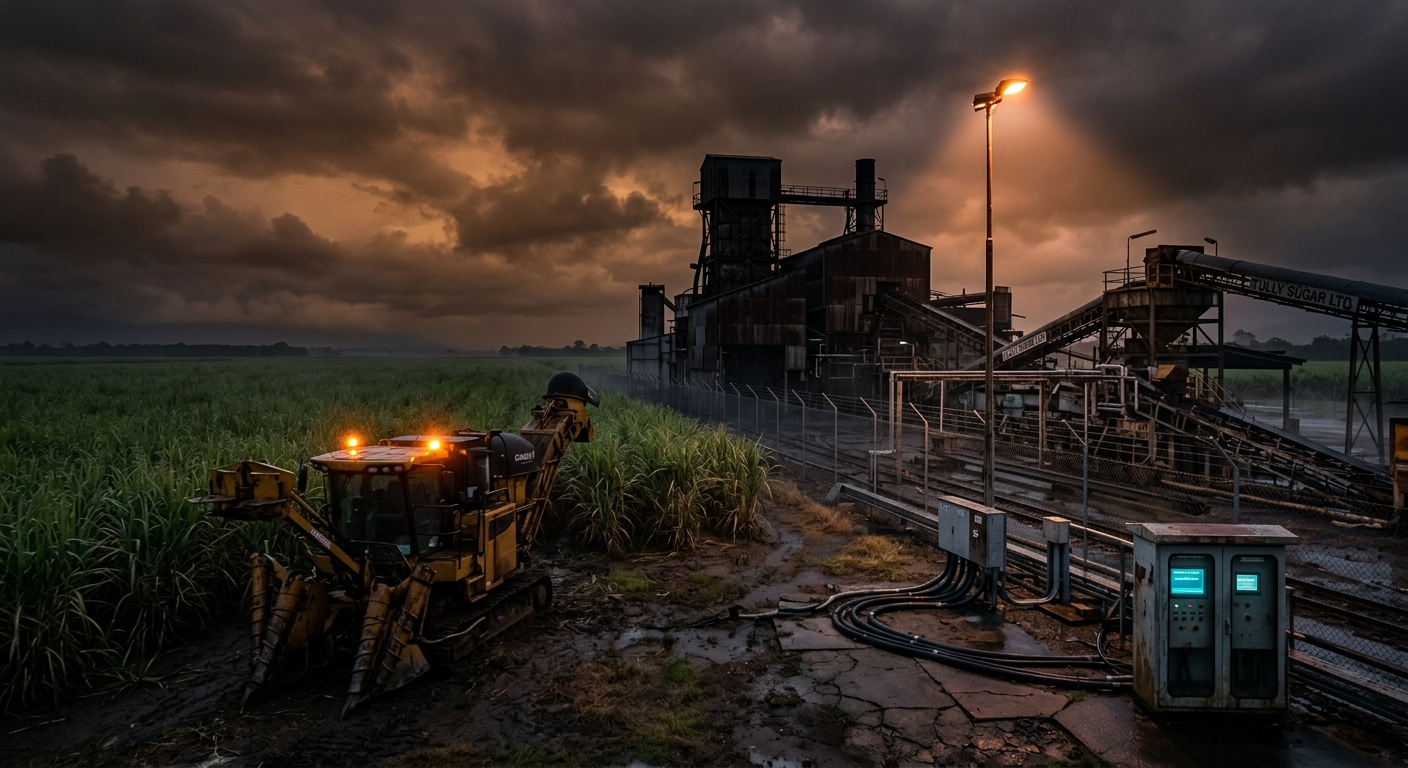
Mackay Sugar confirmed it was responding to a cybersecurity incident affecting parts of its operations, forcing the shutdown of its Farleigh and Racecourse mills in the Mackay region of north Queensland. The timing could hardly have been worse: the incident landed just days into the 2026 crushing season, halting sugar milling, cane haulage, and harvesting activities across the board. Growers were instructed to immediately stop harvesting sugarcane until further notice.
The company has brought in specialist cybersecurity experts and is working with relevant authorities to investigate the breach and safely recover its systems, introducing interim measures to keep critical business functions running and minimize the impact while it works toward restarting the affected mills. Mackay Sugar’s third mill, in the Marian district, was not yet scheduled to begin operations and so was unaffected by the shutdown.
Why a mill shutdown cascades
A sugar mill is not a standalone factory — it is the hub of a tightly synchronized agricultural supply chain, and when the hub stops, everything upstream backs up. Sugarcane is a perishable, time-critical crop: once cut, cane begins losing sugar content and must be processed quickly, which is why a milling halt forces growers to stop harvesting rather than pile up cane that will degrade. The instruction to down tools ripples outward to harvesting contractors, haulage operators, and the growers whose income depends on getting cane crushed during a finite seasonal window.
The crushing season itself is the constraint. There are only so many weeks to process a year’s crop, and every day the mills sit idle is a day that cannot be recovered later. A breach that might be a manageable IT problem in another industry becomes, in agriculture, a direct threat to a harvest that the weather and the calendar will not wait for. This is what makes operational disruption in food production so distinct from a data breach: the clock is biological, not administrative.
Agriculture enters the crosshairs
The Mackay incident is part of a clear and accelerating trend: agriculture and food production are now genuine cyber targets, not afterthoughts. Food and agribusiness companies are heavily automated, run interconnected IT and operational-technology (OT) environments, and operate on thin margins with low tolerance for downtime — a combination that makes them both attractive and pressure-able. A milling operation blends corporate IT with industrial control systems running physical machinery, and an attack on either side can halt production.
It echoes a pattern we have documented across critical-infrastructure and manufacturing sectors, where the interdependence of IT and OT and concentration in a few large operators means a single compromise can stop physical output cold. When a handful of large producers handle much of a region’s processing capacity, taking one offline does not just hurt one company — it disrupts an entire agricultural community and, ultimately, a piece of the food supply.
As of reporting, the nature of the incident had not been fully detailed and no threat actor had been publicly named. The key unanswered questions are the ones that determine how bad this gets: whether the attack touched only corporate IT or reached the OT systems controlling the mills themselves, whether any data was stolen, and — most urgently for the growers watching their cane — how quickly the affected mills can safely restart.
The takeaway for food producers
For the agricultural sector, Mackay is a wake-up call dressed as a single company’s bad week. The defensive priorities are the familiar critical-infrastructure fundamentals, applied with seasonal urgency in mind:
- Segment IT from OT so an intrusion into business systems cannot reach the machinery that crushes cane.
- Maintain tested, offline backups and a rehearsed recovery plan, because a fast, safe restart is worth more in this industry than in almost any other — every idle day is lost harvest.
- Plan for degraded-mode operation, the interim measures Mackay is now improvising, before an incident, so critical functions can limp along while systems are restored.
- Treat seasonality as a risk multiplier. An attack timed to the start of crushing season inflicts maximum leverage; defenders should assume adversaries understand the calendar too.
Mackay Sugar is working to reopen and resume crushing. But the growers who were told to stop cutting cane are living the real cost of an agricultural cyberattack — measured not in megabytes, but in a harvest waiting on a network to come back online.
Sources
- The Record — Cyberattack shuts down major Australian sugar producer
- Cyber Daily — Two Mackay sugar mills shut down following cyber incident
- The Cyber Express — Mackay Sugar security incident halts mill operations
- Industrial Cyber — Cyberattack disrupts Mackay Sugar operations, exposing growing agri-industrial cyber risks