A 71-year-old co-founder of one of America’s largest AI server makers was arrested this week for allegedly running a $2.5 billion scheme to smuggle cutting-edge Nvidia AI servers to China — using hair dryers, dummy servers, and encrypted group chats to fool U.S. compliance auditors. This isn’t just corporate crime. It’s a betrayal of U.S. national security dressed up in a server rack.
What Happened
Yih-Shyan “Wally” Liaw, co-founder of Super Micro Computer (SMCI) — the $35 billion server giant that supplies AI infrastructure to some of the biggest names in tech — was arrested and charged with conspiring to export controlled U.S. AI technology to China without the required licenses.
The scope is staggering. Prosecutors allege Liaw and co-conspirators funneled approximately $2.5 billion worth of Nvidia AI servers to Chinese end-users by routing shipments through a Southeast Asian shell company designed to obscure the true destination. In just three weeks during the spring of 2025, they allegedly moved $510 million worth of hardware — a pace that signals this wasn’t opportunistic. It was industrial-scale.
One of Liaw’s co-founders in the scheme remains a fugitive. Liaw himself faces up to 30 years in federal prison.
Separately, the Department of Justice also charged three additional individuals for conspiring to unlawfully divert cutting-edge U.S. AI technology to China using false shipping documents and staged dummy server setups. The DOJ press release makes clear this was a coordinated, multi-front operation — not a single bad actor going rogue.
How They Did It: Hair Dryers and Hollow Servers
The operational tradecraft here is almost brazen in its audacity.
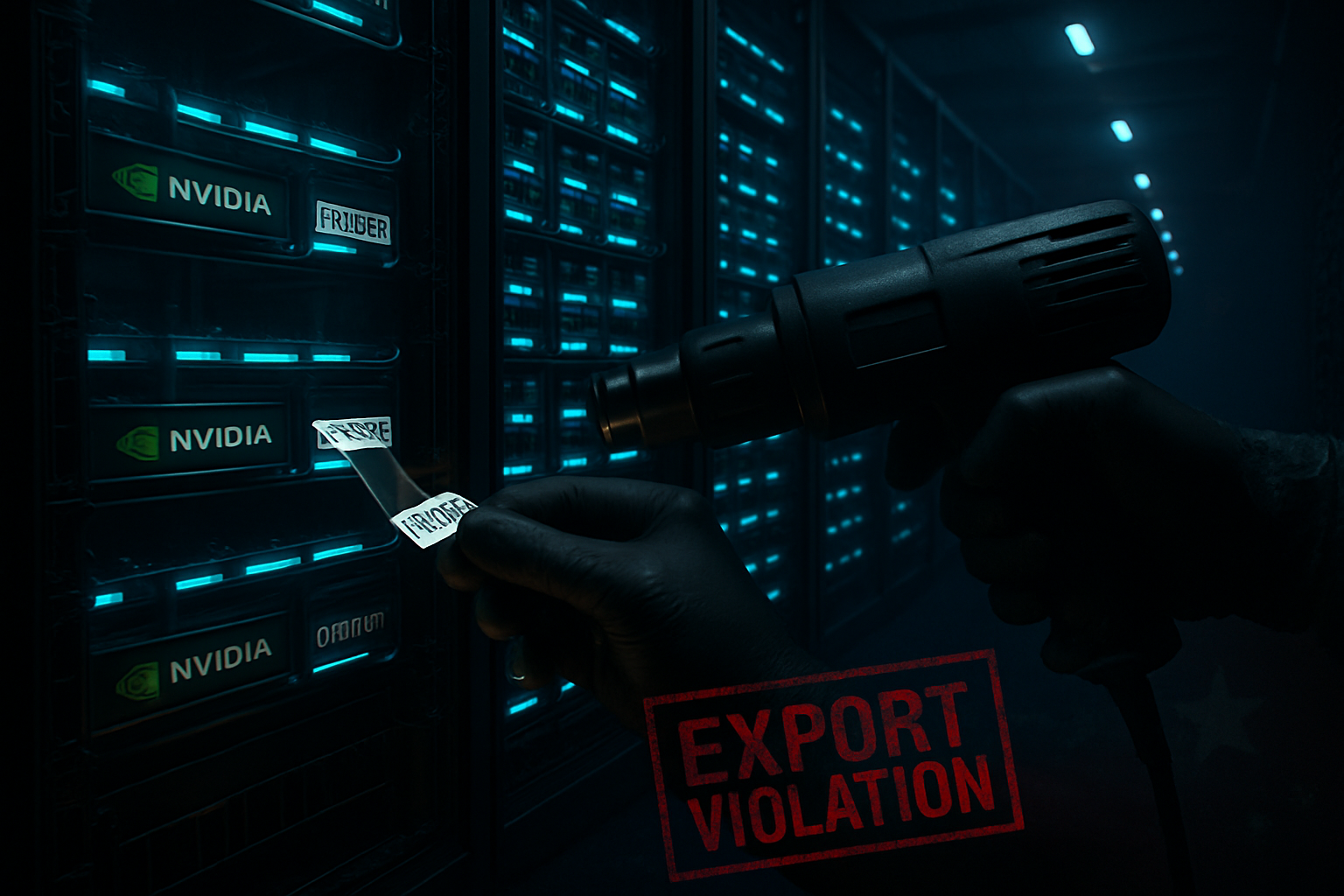
To fool U.S. compliance auditors who routinely inspect hardware for export control violations, the scheme allegedly involved building thousands of fake dummy servers — hollow or non-functional units that looked like legitimate domestic inventory on paper and in person. Real Nvidia GPU servers were swapped in for export while the fakes stayed behind to satisfy auditors checking serial numbers and inventory counts.
Then there’s the detail that will probably end up in a movie: Liaw was reportedly caught on surveillance camera using a hair dryer to remove and swap serial number stickers from servers. The method is almost insultingly low-tech — a $15 appliance defeating a multi-billion-dollar compliance regime. Heat the sticker, peel it, reapply it to a different chassis. The serial number now says whatever you need it to say.
Coordination among conspirators happened over encrypted group chats, a now-standard feature of sophisticated export control evasion operations. The use of end-to-end encryption made real-time communication harder for law enforcement to intercept and made it easier to coordinate across borders.
The Deeper SMCI Story: A Company That Can’t Stay Clean
If you’ve been following Super Micro for any length of time, you’re not exactly shocked.
SMCI has been a regulatory and accounting lightning rod for years. In 2018, the company was delisted from Nasdaq for failing to file financial statements on time. In 2020, the SEC charged Super Micro with “widespread accounting violations” covering more than $200 million in improperly recognized revenue. The company paid a $17.5 million settlement — and then, in a move that defied all corporate governance norms, proceeded to re-hire some of the executives implicated in the scandal.
In 2024, short-seller Hindenburg Research published a damning report targeting the company’s financial practices. Shortly after, Ernst & Young resigned as Super Micro’s auditor — a red flag so severe it sent shares tumbling. EY’s resignation letter, as reported at the time, cited concerns about the company’s commitment to integrity and governance.
Now we have a co-founder charged with a $2.5 billion export control scheme. Liaw personally holds approximately $464 million in SMCI stock. When the news broke after hours Thursday, shares fell as much as 12-14%, dropping from a close of $30.79 to a low of $26.70 in after-hours trading.
This is a company that has been given chance after chance to clean up its act, and appears to have responded each time by finding new ways to generate headlines for the wrong reasons.
The Timing: Trump’s Open Door, Then a Trap
Here’s the geopolitical wrinkle that makes this story land differently than a typical export control case.
Just days before this arrest, the Trump administration removed AI chip export restrictions that had been a cornerstone of the Biden-era tech containment strategy toward China. The move was controversial — critics argued it handed Beijing a strategic gift, while supporters claimed the restrictions were economically damaging and easily circumvented anyway.
Then this arrest drops.
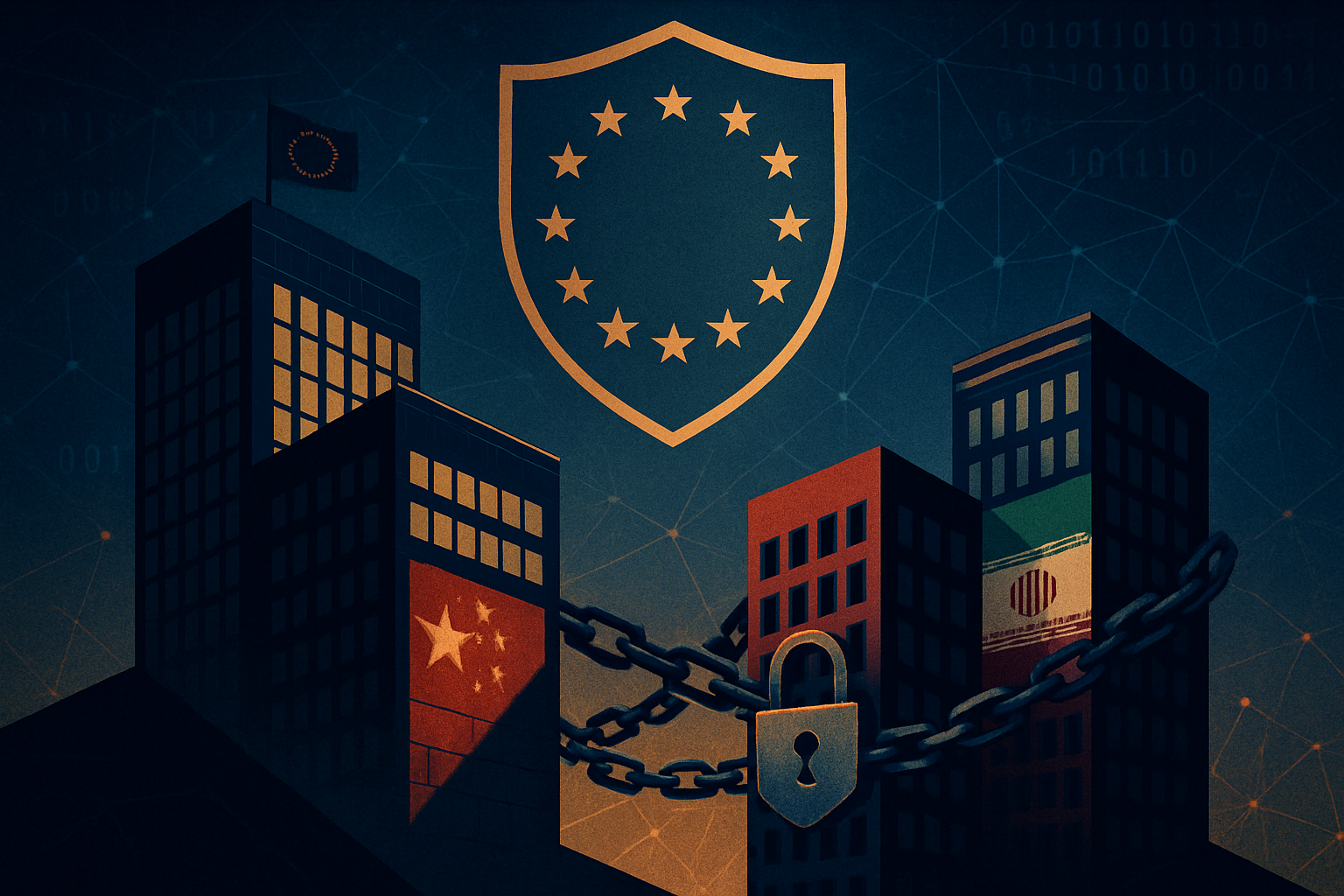
The message from DOJ is unmistakable: even if the front door gets widened by policy, the window is still closed. You can lobby for export decontrol. You cannot run a shadow smuggling operation using fake servers and a heat gun. The formal loosening of restrictions doesn’t grant retroactive amnesia for the $2.5 billion allegedly moved through shell companies and serial number swaps.
If anything, the timing might be strategic. A high-profile arrest on AI chip smuggling — while the administration simultaneously loosens official restrictions — sends a clear signal to the industry: the rules that remain will be enforced hard.
What This Means
For the AI supply chain, this case exposes how porous export control enforcement has been in practice. If a co-founder of a major U.S. AI server manufacturer could allegedly run a $2.5 billion diversion scheme using hardware auditors, shell companies, and a hair dryer, the compliance infrastructure around AI chip exports has serious structural gaps.
For SMCI specifically, the question is whether the company survives another reputational catastrophe of its own making. The stock is under pressure, the governance questions are back, and a co-founder is facing federal charges. There are only so many times a company can burn down and rebuild before investors and customers stop believing the rebuilding story.
For the broader AI race, the case illustrates how much economic and strategic value is embedded in GPU access. When a single server shipment is worth hundreds of millions of dollars, you get sophisticated actors willing to run elaborate deception operations to move them. Export controls create arbitrage. Arbitrage creates crime.
The arrest of Wally Liaw won’t be the last of its kind. The economics are too compelling, the hardware too valuable, and — as SMCI’s entire history demonstrates — the temptation to cut corners in pursuit of revenue is apparently irresistible for some.
DOJ is currently prosecuting this as a national security matter. That framing matters. This isn’t tax evasion or a paperwork violation — it’s a deliberate effort to provide China’s AI ecosystem with the compute infrastructure it needs to close the gap with U.S. capabilities. Whether the sentence reflects that seriousness remains to be seen.
What we know right now: one co-founder is in custody, another is a fugitive, and a $35 billion server company is once again explaining itself to federal prosecutors.
Some companies learn from their mistakes. Super Micro keeps making new ones.