Breaking: Attack highlights ongoing cybersecurity challenges for critical government infrastructure
The French Interior Ministry confirmed Friday that its email servers were targeted in a cyberattack this week, marking the latest in a series of high-profile security incidents affecting French government infrastructure throughout 2024 and into 2025.
Interior Minister Laurent Nuñez disclosed the breach during an interview with RTL radio, revealing that attackers successfully accessed several files from the ministry’s email systems. However, Nuñez sought to downplay the severity of the incident, stating there is currently no evidence that the compromised files were seriously damaged or extensively exploited.
 Breached CompanyBreached Company
Attack Details and Response
The breach, which occurred sometime during the week of December 9-13, 2025, targeted the email infrastructure of France’s Interior Ministry—the agency responsible for internal security, law enforcement coordination, and national police operations. The ministry oversees some of the most sensitive security operations in the French government, making it a prime target for both nation-state actors and cybercriminal groups.
“There has been a cyber attack. An attacker was able to access a number of files… there is no evidence that they were seriously compromised,” Nuñez told RTL radio. He emphasized that the ministry has implemented immediate protective measures in response to the intrusion.
The ministry’s response included strengthening access controls for its computer systems and implementing additional security protocols for ministry agents. “We have put in place protection measures. We strengthened conditions of access to the computer system for our agents,” Nuñez confirmed, adding that a formal investigation is currently underway.
Critically, French authorities have not yet attributed the attack to any specific threat actor or nation-state. The origin of the breach remains unknown at this stage, leaving open questions about whether this was the work of sophisticated state-sponsored hackers, ransomware operators, or hacktivist groups.
Context: France’s Escalating Cyber Threat Landscape
This latest incident comes amid an intensifying cyber threat environment for French government entities. France has experienced a dramatic increase in cyberattacks targeting its public sector infrastructure throughout 2024, with France’s National Cybersecurity Agency (ANSSI) reporting a 15% increase in security events compared to the previous year.
According to ANSSI’s 2024 Cyber Threat Overview, the agency handled 4,386 security events during the year, including 3,004 reports and 1,361 confirmed incidents. The report highlighted that French government agencies have faced persistent targeting from multiple threat actor groups, including:
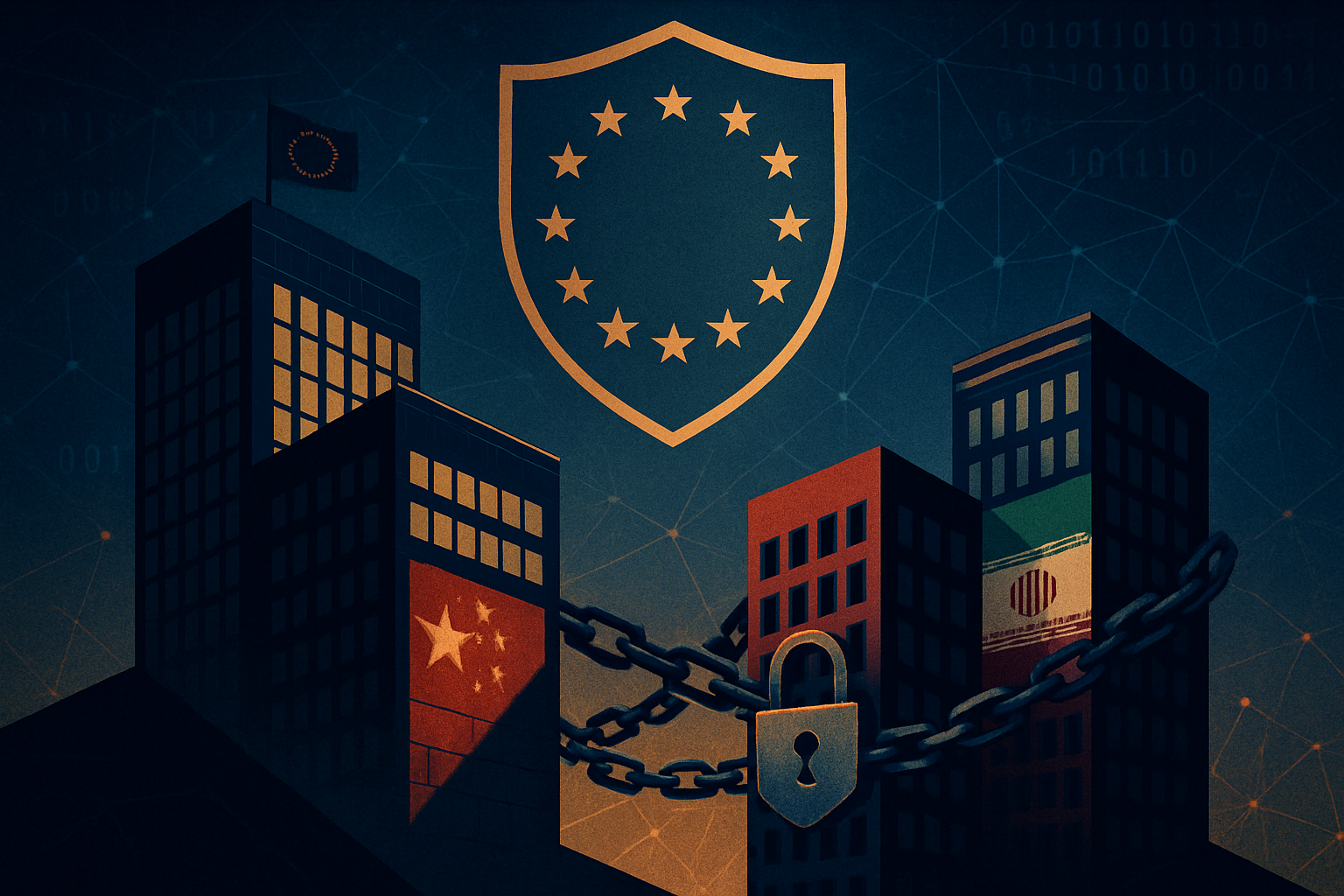
- Russian APT28 (Fancy Bear): Linked to Russia’s GRU military intelligence, this group has conducted extensive espionage campaigns against French governmental, diplomatic, and research entities since 2021. French authorities formally attributed multiple attacks to APT28 in 2024 and imposed sanctions on individuals and entities connected to the group.
- Chinese intrusion sets: ANSSI documented “particularly dense and widespread” activity associated with Chinese threat actors throughout 2024, primarily aimed at gathering strategic and economic intelligence.
- Cybercriminal ransomware groups: Ransomware attacks represented a staggering 128% increase since 2020, with private companies, local authorities, higher education institutions, and strategic companies frequently targeted.
The Interior Ministry breach follows several other significant cybersecurity incidents affecting the French government in recent years:
 Breached CompanyBreached Company
March 2024: “Unprecedented Intensity” DDoS Attacks
In March 2024, approximately 2,000 French government websites—including the Ministry of Justice, Ministry of Culture, and Treasury—were hit by distributed denial-of-service (DDoS) attacks described by Prime Minister Gabriel Attal as having “unprecedented intensity.” The hacktivist group Anonymous Sudan claimed responsibility for these attacks, which disrupted services but were ultimately contained by French cybersecurity teams.
February 2024: Healthcare Data Breach
France experienced its largest-ever data breach when attackers compromised two healthcare payment service providers—Viamedis and Almerys—exposing the personal data of approximately 33 million people, nearly half the French population.
March 2024: France Travail Massive Breach
The French unemployment agency France Travail suffered a devastating attack that compromised the data of 43 million individuals—including names, dates of birth, social security numbers, email addresses, and phone numbers dating back 20 years. This represented nearly the entire working population of France.
April 2024: St-Nazaire Municipal Systems
Multiple French cities were knocked offline by coordinated cyberattacks, with St-Nazaire facing what some officials described as an “act of war” that disabled critical municipal IT infrastructure.
Laurent Nuñez: Security Expert Leading Crisis Response
The Interior Ministry breach comes just two months after Nuñez assumed his position as Interior Minister in October 2025, replacing Bruno Retailleau. Nuñez brings extensive cybersecurity and intelligence credentials to the role, having previously served as:
- Director-General of France’s General Directorate for Internal Security (DGSI) from 2017-2018
- National Coordinator for Intelligence and Counter-Terrorism (2020-2022)
- Paris Police Prefect (2022-2025), where he successfully oversaw security operations for the 2024 Paris Olympics
His appointment was widely viewed as emphasizing operational expertise over political symbolism, particularly given his deep familiarity with France’s security apparatus and crisis management experience. The successful delivery of security for the 2024 Olympics—involving coordination of 43,000 security personnel with no major incidents—earned Nuñez recognition as Commander of the Legion of Honour earlier in 2025.
 Breached CompanyBreached Company
What Remains Unknown
Several critical questions remain unanswered about this latest breach:
Attribution: Without knowing who carried out the attack, it’s impossible to assess the strategic objectives or potential ongoing risks. Was this a nation-state espionage operation? A ransomware group seeking extortion? Or hacktivist disruption?
Scope of Compromise: While Nuñez stated there’s “no evidence” of serious compromise, the full extent of data exfiltration and the sensitivity of accessed files has not been disclosed. Email servers typically contain vast amounts of sensitive operational communications.
Attack Vector: How did attackers initially gain access? Was this a sophisticated supply chain attack, a phishing campaign that compromised credentials, or exploitation of a known vulnerability?
Timeline: The vague “this week” timeframe leaves uncertainty about exactly when the breach occurred, how long attackers maintained access, and whether they’ve been completely expelled from ministry systems.
Data Exfiltration: It remains unclear whether attackers simply accessed files or successfully exfiltrated large volumes of sensitive government communications and data.
Implications for Government Cybersecurity
This incident underscores several critical challenges facing government agencies worldwide:
1. Email Systems as High-Value Targets: Government email infrastructure represents an attractive target for threat actors seeking intelligence, as email communications often contain sensitive policy discussions, operational plans, and personal information.
2. Defense in Depth: The breach demonstrates that even organizations with sophisticated security operations—like France’s Interior Ministry with direct oversight of national security—remain vulnerable to determined attackers.
3. Rapid Response Imperative: The ministry’s immediate implementation of enhanced access controls shows recognition that post-breach containment and hardening are critical to limiting damage.
4. Persistent Threat Environment: France’s experience throughout 2024-2025 illustrates that government agencies face sustained, multi-vector threats from diverse adversaries operating simultaneously.
5. Transparency Challenges: The balance between transparency about breaches (which helps other organizations defend themselves) and operational security (which limits attacker intelligence) remains difficult to navigate.
Looking Ahead
As the investigation continues, several developments merit close monitoring:
- Attribution: French intelligence services and ANSSI will work to identify the attackers through technical analysis and intelligence correlation
- Legislative Response: This breach may accelerate France’s implementation of the NIS 2 Directive requirements into national law
- Enhanced Protections: Expect additional security measures across French government IT infrastructure
- International Cooperation: If nation-state attribution is confirmed, diplomatic and potentially retaliatory responses may follow
The Interior Ministry breach serves as a stark reminder that government cybersecurity requires continuous evolution to match increasingly sophisticated and persistent adversaries. As Minister Nuñez noted in ANSSI’s 2024 threat assessment, maintaining pressure on the cybercriminal ecosystem through cooperation with international partners remains essential to France’s cyber defense posture.
For organizations operating critical infrastructure—whether in government or the private sector—this incident reinforces fundamental security principles: assume breach, implement defense in depth, maintain rapid incident response capabilities, and continuously adapt to the evolving threat landscape.